Commercial carpet is one of the largest surface investments in most office buildings, and one of the most misunderstood to maintain. Two facilities can install the exact same carpet on the same day; five years later one looks a season old and the other is being torn out and replaced. The difference is almost never the carpet — it's the cleaning method and the schedule behind it.
This guide breaks down the three cleaning methods professional crews actually use, explains when each one is the right call, and lays out the maintenance rhythm that lets Northern Nevada businesses in Reno and Sparks, Carson City and Dayton, Minden and Gardnerville, and Lake Tahoe stretch a carpet's usable life well past its warranty.
Why Northern Nevada Is Hard on Carpet
Our high-desert climate works against carpet in ways coastal regions never deal with. Fine, abrasive dust rides in on every door cycle and settles deep in the pile, where it acts like sandpaper on the fibers each time someone walks across it. In winter, ice-melt salt tracks in from parking lots and sidewalks, drawing moisture into the carpet and leaving a white haze that ordinary vacuuming won't lift. During fire season, settled smoke particulate adds another layer of embedded soil.
The takeaway: in this climate, the enemy of carpet isn't stains you can see — it's the invisible grit ground into the base of the pile. That's what dictates which cleaning method you need and how often.
The Three Commercial Carpet Cleaning Methods
1. Hot-Water Extraction (Steam Cleaning)
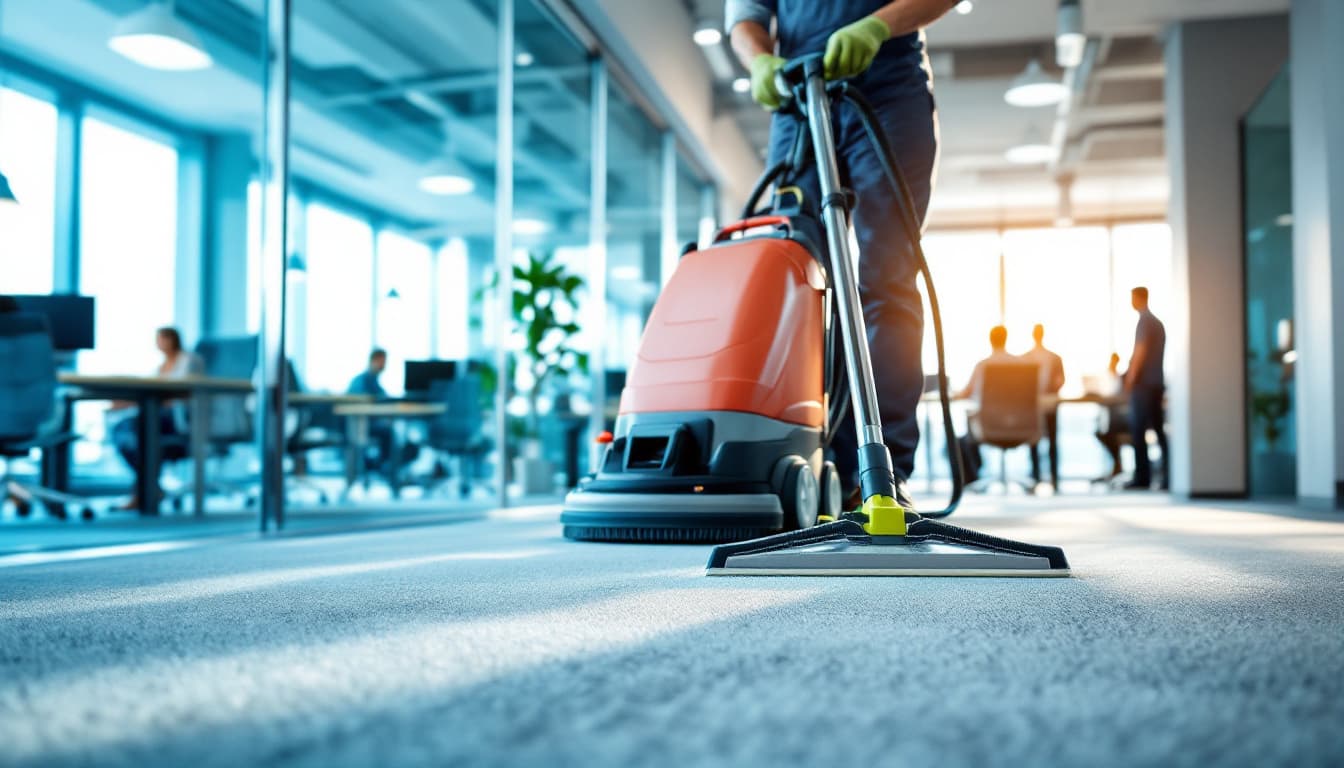
Hot-water extraction is the deep-clean workhorse and the method most manufacturers require to keep a carpet warranty valid. A machine injects a heated cleaning solution deep into the pile under pressure, then immediately vacuums it back out along with the suspended soil. Done correctly, it removes the embedded grit and allergens that surface methods leave behind.
- Best for: Periodic restorative deep cleans, heavily soiled areas, allergen reduction, and anywhere the carpet warranty specifies extraction.
- Dry time: Typically 4–8 hours, faster in Nevada's dry air than almost anywhere in the country — one genuine local advantage.
- Watch for: Over-wetting. An undertrained crew that leaves the carpet saturated risks wicking, adhesive breakdown, and — in rare cases — mold under the backing. Proper extraction leaves the carpet damp, not soaked.
2. Encapsulation (Low-Moisture Cleaning)
Encapsulation is the modern standard for routine interim maintenance. A specialized detergent is worked into the carpet with a cylindrical or rotary brush; as it dries, the chemistry crystallizes around each soil particle, "encapsulating" it into a brittle residue that the next vacuuming pulls away. It uses a fraction of the water extraction does.
- Best for: High-traffic corridors, lobbies, and open-plan offices that need to look consistently sharp between deep cleans.
- Dry time: 20–60 minutes, so an area can go back into service the same evening — ideal for facilities that can't spare a full overnight.
- Watch for: It's a maintenance method, not a rescue method. Encapsulation keeps a clean carpet clean; it won't restore one that's been neglected for years.
3. Bonnet Cleaning
Bonnet cleaning uses an absorbent pad on a rotary machine to wipe soil off the top layer of the pile. It produces a fast surface-level result and is common in hospitality, but it's the most limited of the three: it only touches the top of the fibers, can push soil downward, and can distort certain pile types if overused.
- Best for: Quick appearance touch-ups on light commercial carpet before an event or a walkthrough.
- Watch for: Relying on it as your only method. Bonnet-only programs are a leading cause of carpet that looks acceptable on top but wears out from the base up.
The Layered Approach That Actually Works
The best commercial programs don't pick one method — they layer them. A well-designed schedule looks like this:
- Daily: Vacuuming with a commercial machine, focused on entry zones and traffic lanes where grit concentrates. This single habit removes more soil over a year than every deep clean combined.
- Interim: Encapsulation on high-traffic areas on a rolling schedule — monthly or quarterly depending on foot traffic.
- Restorative: Full hot-water extraction one to four times a year, matched to actual traffic and the manufacturer's warranty terms.
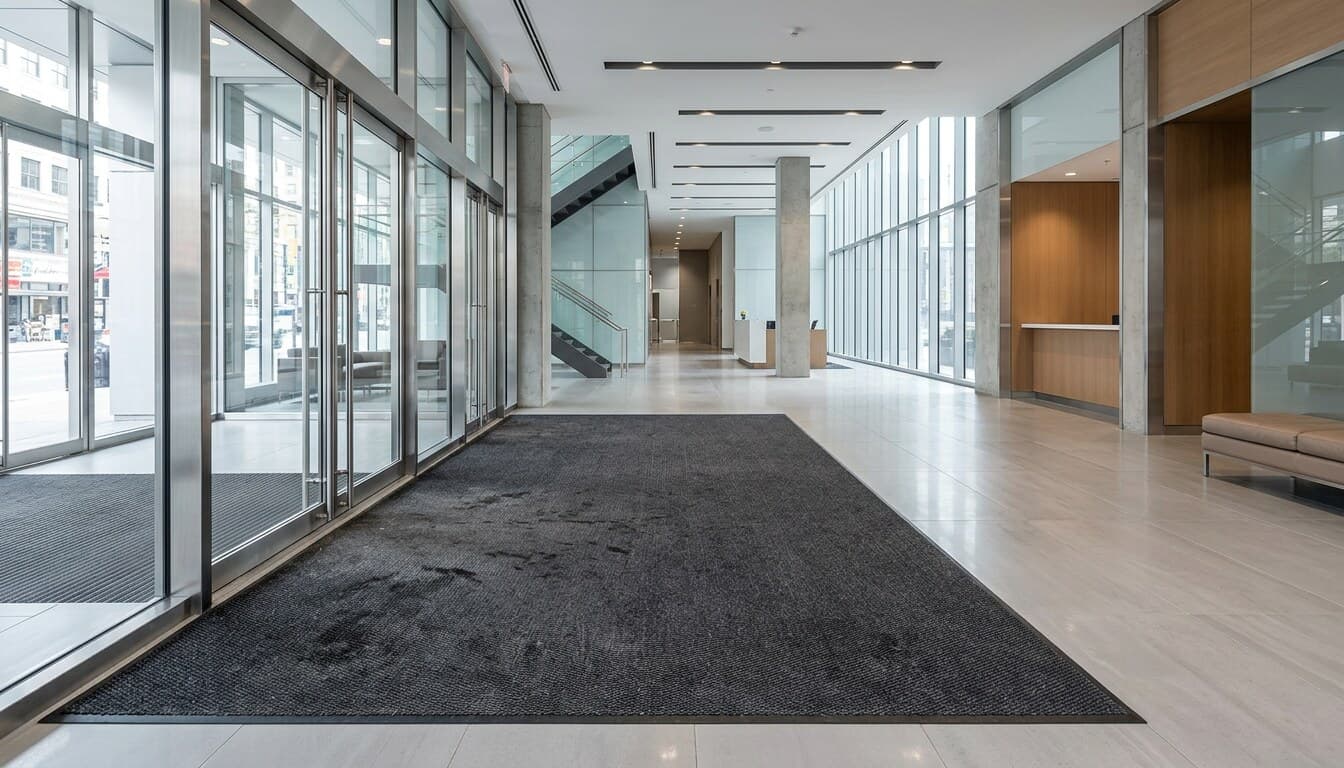
- Preventive: Serious entry matting at every exterior door. Roughly 80% of the soil in a building walks in through the front door, and good matting stops most of it before it ever reaches the carpet.
This layering is the heart of how the right program doubles carpet lifespan. Manufacturers commonly cite a 10-year life for commercial carpet, but that number assumes maintenance. Neglected, the same carpet is often threadbare in traffic lanes by year five or six. Maintained on a layered schedule, 12 to 15 years of good appearance is realistic — and every extra year you get is a capital replacement you didn't have to fund.
How Often Should Commercial Carpet Be Deep-Cleaned?
There's no universal number, but these ranges hold up well across Northern Nevada facilities:
- Light traffic (private offices, low-visitor spaces): extraction 1–2 times per year.
- Moderate traffic (general office, open-plan): extraction 2–3 times per year, plus quarterly encapsulation on lanes.
- Heavy traffic (lobbies, corridors, retail, clinics): extraction 4+ times per year, plus monthly encapsulation.
- Medical and clinical spaces: driven by protocol, not just appearance — see our approach to medical office cleaning.
If you're not sure where your building lands, our cleaning frequency guide walks through how to read traffic patterns and set a cadence that fits.
Carpet Is One Piece of a Bigger Floor-Care Picture
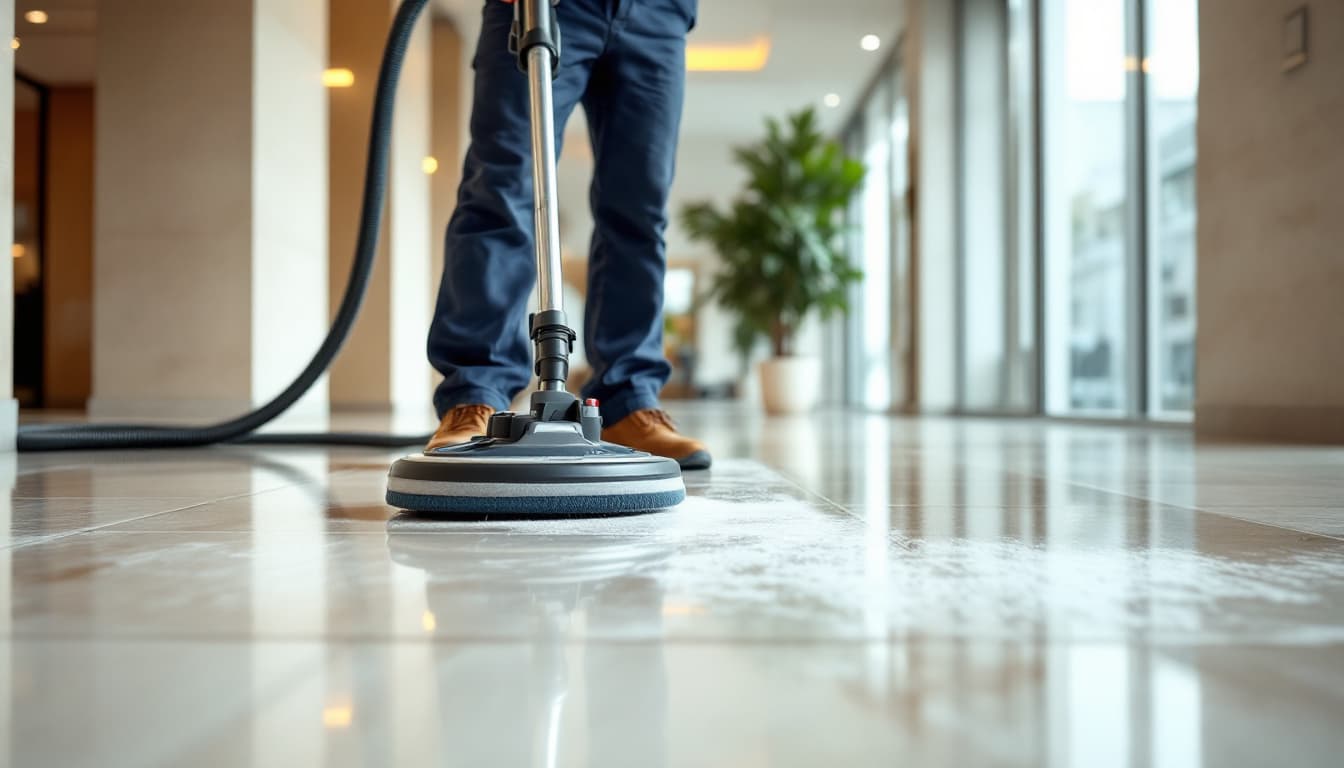
Most facilities run a mix of surfaces — carpet in the offices, hard floors in the corridors and restrooms, tile at the entries. Each needs its own protocol, and treating them all the same is the fastest way to ruin an expensive floor. Our broader floor care program covers strip-and-wax, buffing, and hard-surface maintenance alongside carpet, and our guide to hardwood, LVP, and laminate care digs into the hard-surface side.
When it's time to replace carpet or hard flooring rather than restore it, the team at Landmark Flooring works across the Reno, Carson City, and Lake Tahoe corridor and is a solid local reference for choosing materials that stand up to Northern Nevada conditions.
The Bottom Line
Carpet doesn't wear out on a fixed timer — it wears out on a schedule you control. The right layered program of daily vacuuming, interim encapsulation, periodic extraction, and serious entry matting is far cheaper than early replacement, and it keeps your space looking the way it did the week it opened. If your carpet is showing traffic lanes, drying slowly after cleanings, or getting the same treatment as every other surface in the building, it's worth a fresh look at the program behind it.
Benchmark builds commercial carpet cleaning into office cleaning and janitorial programs around each building's real traffic — and we'll tell you honestly when a smarter maintenance schedule would serve you better than more frequent deep cleans. Call (775) 530-0456 or request a free quote and we'll walk your facility with you.
Related Reading
Ready for a Cleaner Workspace?
Get a free, no-obligation cleaning plan customized for your Northern Nevada business.