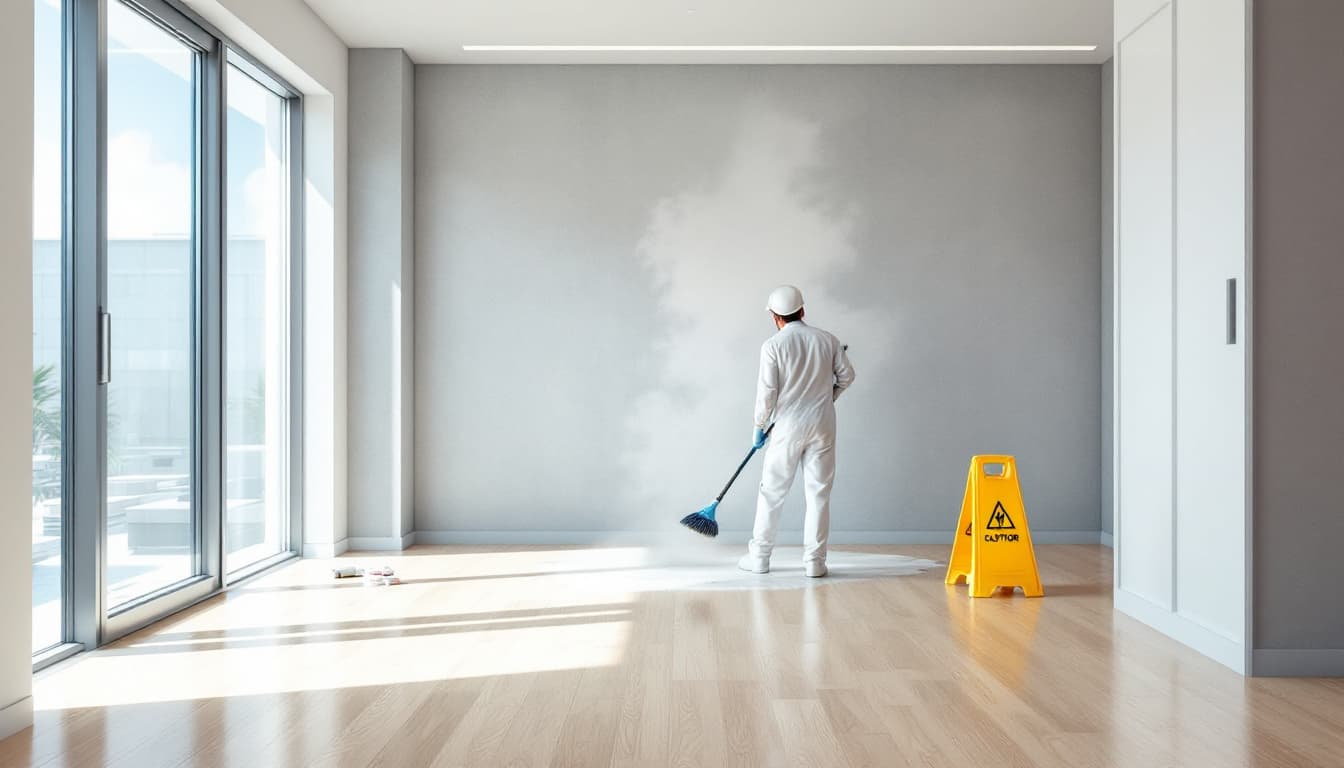
Walk up to any commercial building and the first surface you actually look through is the glass. The entry doors, the storefront, the lobby partitions — clean, clear glass reads as a facility that's on top of things, and smudged, hazy, spotted glass quietly undercuts everything behind it. It's the one surface a client, patient, or customer evaluates before they've even walked inside, and it's the fastest to start looking neglected.
It's also the surface most people assume is simple. Spray, wipe, done — how hard can a window be? Hard enough that professional window cleaning is a genuine skill, and doing it badly leaves glass looking worse than if you'd left it alone. This guide breaks down why streak-free glass is a technique problem rather than a product one, why Northern Nevada's climate is unusually rough on windows, and how businesses across Reno and Sparks, Carson City and Dayton, Minden and Gardnerville, and Lake Tahoe can keep their glass looking sharp between visits.
Why Glass Streaks — and Why Paper Towels Make It Worse
A streak is nothing more than a thin film of cleaning solution and dissolved soil that dried on the glass instead of being removed. That's the whole problem in one sentence, and it explains why the two most common in-house tools — a spray bottle and a roll of paper towels — are almost guaranteed to leave streaks.
Paper towels shed lint, can't hold enough liquid to actually lift soil, and smear the dirty solution around rather than carrying it off the glass. Consumer spray cleaners often contain additives that leave their own residue as they dry. Together they produce the classic result: glass that looks clean while it's wet and streaky the moment it dries and the light hits it at an angle. The fix isn't a stronger chemical — it's a method that removes the solution completely before it can dry.
The Squeegee Is the Whole Game
Professional window cleaning comes down to one tool used well: the squeegee. A clean rubber blade pulled across wet glass shears the solution — and the soil suspended in it — off the surface in a single pass, leaving nothing behind to dry into a streak. It sounds simple, and the physics are, but the execution is where skill lives:
- The glass is wetted and scrubbed first with a soft washer or strip applicator, so the solution has a moment to break down dust, films, and fingerprints before anything is removed.
- The squeegee blade is kept clean and sharp. A nicked or dirty blade leaves a line down every stroke; pros wipe the blade after each pull and replace rubber long before an amateur would notice it's worn.
- Each stroke overlaps the last and the blade is wiped between strokes, so no band of dirty solution is dragged back across cleaned glass.
- The edges are detailed by hand with a lint-free cloth — the perimeter is where solution pools and where streaks reappear if it's rushed.
None of this shows up in a photo. It shows up an hour later, when the sun moves and the glass either stays invisible or lights up with every stroke the crew took. That's the difference between glass that was cleaned and glass that was merely wiped — the same "looks-clean-vs-is-clean" gap that separates real restroom sanitation from a quick pass.
The Detail Everyone Skips: Sills, Tracks, and Frames
Here's the mistake that undoes an otherwise perfect job — cleaning the glass and ignoring the frame around it. Window sills, tracks, and frames collect a startling amount of dust, dead insects, and grit, and the first rain, sprinkler cycle, or damp cloth washes that grime straight down onto the glass you just cleaned. Clean glass in a dirty frame is clean for about a day.
A professional sequence details the frame first — vacuuming or wiping out the tracks and wiping down the sill and frame — so there's nothing left to run back down onto the finished glass. It's unglamorous and it's exactly the kind of step that gets cut when window cleaning is treated as an afterthought instead of part of a real janitorial program.
Why Northern Nevada Is Especially Hard on Windows
Our high-desert climate attacks glass from two directions, and both mean windows here need attention more often than a national maintenance template would suggest.
- Fine, airborne dust. The same grit that grinds down floor finish and settles into carpet rides on every gust of wind and lands on glass constantly. In the windy Truckee Meadows spring, a storefront cleaned last week can look dusty and hazy within days. Dust also loves the static and oils on glass, so it clings rather than blowing off.
- Hard water and mineral spotting. Northern Nevada's hard water leaves mineral deposits wherever it dries on glass — sprinkler overspray on storefront and ground-floor windows is the usual culprit, spotting the lower panes with white, cloudy mineral scale. Left alone, those deposits etch into the glass and stop coming off with ordinary cleaning entirely, at which point you're looking at a restoration job or replacement, not a wash.
The takeaway is the same lesson that runs through our cleaning frequency guide: a schedule copied from a coastal facility leaves Northern Nevada glass looking tired well before the next visit. Frequency has to be set to local conditions — and for windows, catching mineral spotting early is far cheaper than fixing etched glass later.
How Often Should Commercial Windows Be Cleaned?
There's no single number, but these ranges hold up well across the region once you account for our dust and hard water:
- High-visibility storefront and lobby glass (retail, restaurants, customer-facing entries): interior and reachable exterior glass weekly to biweekly — this is the glass your customers judge you by, and it's worth the cadence.
- General office glass (entry doors, conference-room walls, partitions): interior monthly, with exterior on a quarterly rhythm and a bump during spring wind season.
- Back-office and low-traffic glass: quarterly is usually enough, folded into the broader cleaning schedule.
- Medical and clinical glass: coordinated with infection-control cleaning rather than set by appearance alone — see our approach to medical office cleaning.
Between professional visits, the highest-return in-house habit is a quick eye-level wipe of entry-door glass, where fingerprints concentrate fastest — one of the small routines in our guide to keeping a facility cleaner between professional cleanings.
Interior, Exterior, and Knowing the Limit
Most commercial glass work is safely reachable — interior partitions, conference-room walls, mirrors, entry doors, storefronts, and ground-to-low-rise exterior windows cleaned from the ground or a standard pole system. That covers the vast majority of what a typical office, clinic, or retail space needs, and it's exactly where a professional crew delivers the most visible return.
The honest limit is height. High-rise exterior work and anything requiring rope access or lifts is specialized, safety-critical work that belongs with certified specialists — and a reputable cleaning partner will tell you that plainly and coordinate the schedule rather than sending a crew up a ladder they shouldn't be on. Window and glass service pairs cleanly with a recurring office cleaning or janitorial contract so your whole building — glass, floors, and everything between — stays presentable on one schedule.
Glass Is One Piece of a Bigger Picture
Clean windows sit alongside clean floors, sanitary restrooms, and dust-free surfaces as part of how a building presents itself. Treating any one of them as an afterthought is what leaves a facility looking almost sharp — and "almost" is what a visitor notices. The same discipline that produces streak-free glass shows up in a well-run floor care program and a touchpoint-focused cleaning scope: the right method, matched to the surface, done consistently rather than quickly.
The Bottom Line
Streak-free commercial glass isn't a matter of a better spray bottle — it's squeegee technique, detailed frames, the right solution for hard-water conditions, and a frequency tuned to Northern Nevada's dust and mineral spotting. If your storefront hazes over within days, your entry doors are permanently fingerprinted, or your lower panes have picked up cloudy sprinkler spots that won't wipe off, the problem isn't the glass — it's the program behind it.
Benchmark builds window and glass cleaning into office cleaning and janitorial programs around each building's real glass inventory — interior partitions, entry doors, storefronts, and reachable exterior windows on a frequency that fits your traffic and our climate, with high-rise work referred to certified specialists. Serving Reno-Sparks, Carson City, and the Tahoe corridor. Call (775) 530-0456 or request a free quote and we'll walk your facility with you.
Related Reading
Ready for a Cleaner Workspace?
Get a free, no-obligation cleaning plan customized for your Northern Nevada business.