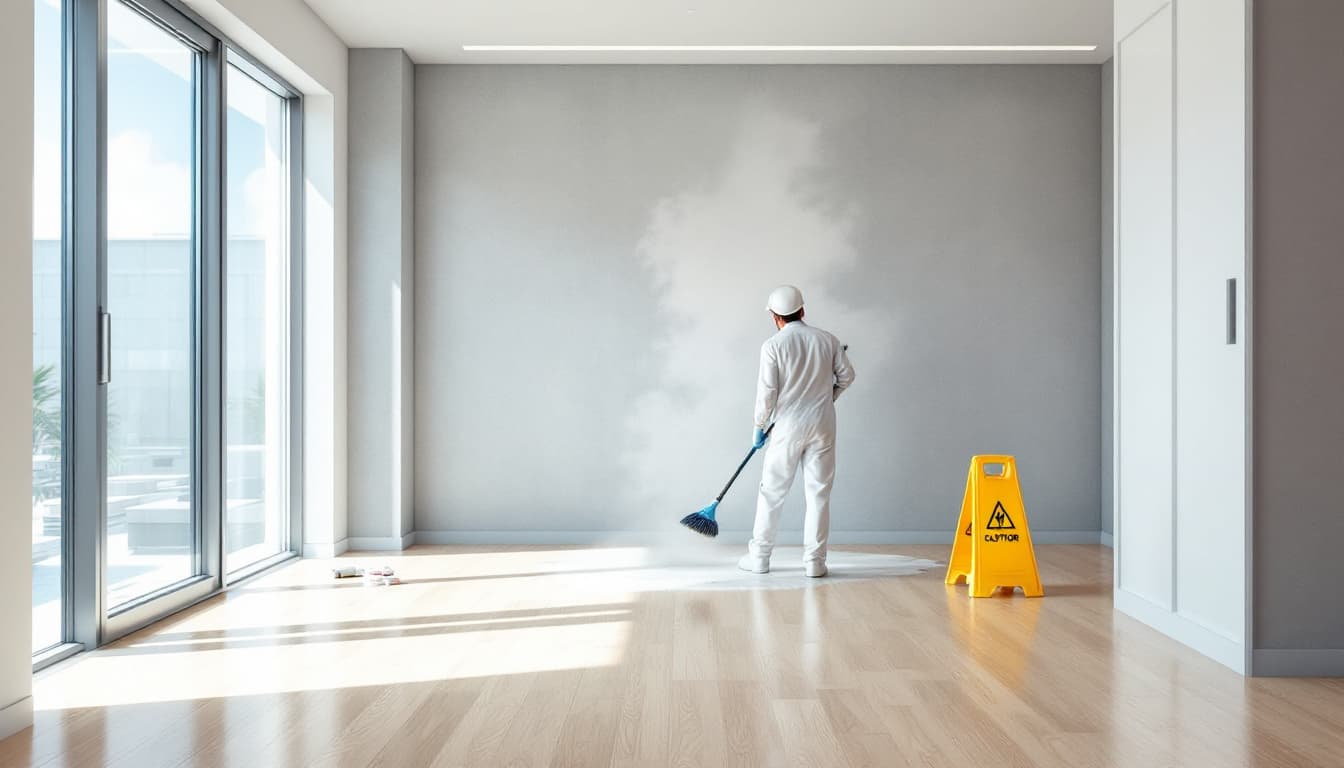
A commercial build reaches a strange in-between moment near the end. The drywall is up, the floors are down, the fixtures are installed, and the general contractor calls it finished — but walk in and drag a finger along a windowsill and it comes away gray. Every hard surface in the building is wearing a fine, even coat of construction dust, and that dust is nothing like ordinary office soil. It's drywall sanding residue, sawdust, concrete grit, and adhesive haze, and it has settled into every seam, vent, light fixture, and freshly installed floor in the space.
Post-construction cleaning is the step that turns a completed build into a space someone can actually move into — and it's a genuinely different discipline from the recurring janitorial work that follows. This guide breaks down what a real post-construction clean covers, why it runs in three distinct phases, and why the high-desert dust across Reno and Sparks, Carson City and Dayton, Minden and Gardnerville, and Lake Tahoe makes the final detail matter even more here than elsewhere.
Why Construction Dust Is Its Own Problem
The instinct is to treat a post-build clean like a big regular cleaning — more surfaces, more time, same job. It isn't, and the reason is the dust itself. Drywall dust is extraordinarily fine and light, so a single pass with a dry cloth or a shop broom doesn't remove it — it launches it back into the air, where it drifts for hours and resettles on every surface the crew already wiped. Clean a room the wrong way and you've simply moved the dust around the building.
It's also abrasive. That gypsum-and-silica grit scratches glass, dulls a brand-new floor finish, and clogs the HVAC filters on a system that has never run a full cycle. Left in the ductwork, it becomes the building's first indoor-air-quality problem the day the tenant turns the system on — the same fine-particulate concern we covered for wildfire smoke and indoor air quality, except baked into the building before anyone moves in. Removing it correctly means capturing it, not chasing it: HEPA-filtered vacuums, microfiber that traps rather than smears, and a top-to-bottom sequence so nothing falls onto a finished surface twice.
The Three Phases of a Post-Construction Clean
A professional post-construction clean isn't one visit — it's a sequence that tracks the trades leaving the site. Skipping a phase is what leaves that persistent haze a tenant notices in the first week.
Phase 1: Rough Clean
The rough clean happens while construction is still wrapping up, once the major trades have cleared out but before the finish work is fully done. It's the heavy lift: removing leftover debris, scrap material, stickers and labels, and the bulk of the loose dust. This phase clears the site so the finishing trades — and the detailed cleaning that follows — have a workable surface. It's unglamorous and it's mostly about volume.
Phase 2: Final (Detail) Clean
This is the phase most people picture when they think "post-construction cleaning," and it's where the space actually becomes presentable. Every surface is cleaned top to bottom in a deliberate order so gravity works for the crew instead of against them:
- High to low, always. Ceilings, vents, light fixtures, and the tops of door frames first; walls, ledges, and fixtures next; floors dead last. Clean the floor first and the dust knocked down from the vents lands right back on it.
- Every horizontal ledge detailed — window sills, tracks, baseboards, cabinet tops, and door frames, where construction dust piles up invisibly and washes back down at the first cleaning.
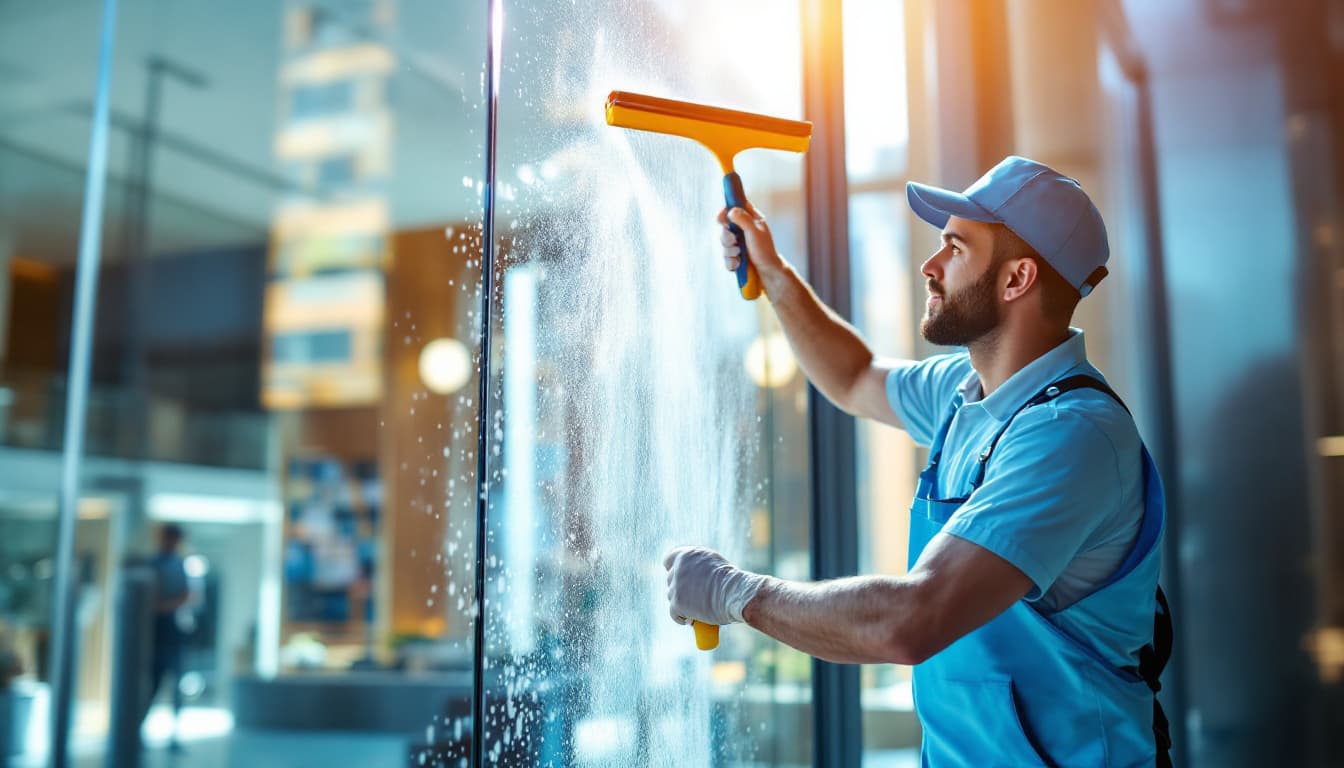
- Interior glass and window tracks cleaned and the stickers and adhesive haze removed — new construction leaves labels on windows, fixtures, and appliances that need proper removal, not a scrape that scratches the glass. It's the same squeegee-and-detail discipline behind real commercial window cleaning.
- Fixtures, cabinetry, and hardware wiped inside and out — new cabinets and drawers collect sawdust in every corner.
- Restrooms and break areas fully cleaned and sanitized, with the protective film pulled off new fixtures and mirrors.
Phase 3: Touch-Up Clean
Between the detail clean and move-in, a little more dust always settles — and last-minute punch-list work kicks up its own. The touch-up phase is a final pass right before the tenant takes the keys: reglass anything that's hazed over, hit the floors again, and wipe the touchpoints so the space is genuinely turnkey on day one.
Floors Are Where a New Build Is Won or Lost
Brand-new flooring is the single most valuable — and most vulnerable — surface in a finished build, and the wrong post-construction approach can damage it before anyone has walked across it. Each surface has a manufacturer-specified break-in protocol, and construction crews rarely follow them:
- New VCT and resilient tile usually needs an initial clean and often its first coats of finish — the foundation for the whole strip-and-wax maintenance cycle that follows. Get this first application wrong and every recoat after it inherits the problem.
- New carpet holds a surprising amount of fine construction dust deep in fresh pile and benefits from a proper extraction before move-in — the starting point of the layered program in our commercial carpet cleaning guide.
- Hardwood, LVP, and laminate must never be wet-mopped aggressively or treated with the wrong chemistry on day one — the exact mistakes covered in our guide to caring for hardwood, LVP, and laminate floors.
Matching the method to a specific new surface is precisely where a cleaning crew and a flooring specialist should be talking to each other. The surface-specific break-in guidance here reflects manufacturer-correct care advised by the flooring experts at Landmark Flooring, who install and finish commercial floors across the Reno, Carson City, and Tahoe corridor — the difference between a floor that starts its life protected and one that's already scratched on move-in day. Getting the first clean right is the cheapest floor protection a new tenant will ever buy, and it feeds directly into a recurring floor care program.
Why Northern Nevada Makes This Harder
Our high-desert climate compounds the problem in a way a national cleaning template doesn't account for. The same fine, airborne grit that drives up cleaning frequency across the region rides in on every unfinished opening on a construction site — so a space detailed on Friday can wear a visible film again by Monday if the building envelope isn't sealed. That's a large part of why the touch-up phase isn't optional here: outdoor dust keeps arriving until the doors and windows are permanently closed and the HVAC is filtering. A crew that understands the local dust load plans the final passes around it rather than declaring victory too early.
Why This Doesn't Belong to the Construction Crew — or a Regular Janitorial Team
Two groups are often expected to absorb this work, and neither is equipped for it. A construction crew is skilled at building, not at HEPA-filtered detail cleaning, sticker and adhesive removal, or manufacturer-correct floor break-in — their "broom clean" is Phase 1, not a finished space. A standard janitorial team is set up for recurring maintenance on an already-clean building, not for the volume of debris, the abrasive dust load, and the delicate new surfaces of a fresh build. Post-construction cleaning sits between the two: it needs the right equipment, the right sequence, and crews who know that a scratched-glass or hazed-floor shortcut costs the client far more than the clean itself.
It's also the natural on-ramp to everything that comes after: the team that details the build understands the space and its surfaces better than anyone, which makes the handoff to a recurring office cleaning or janitorial contract seamless. For clinical and healthcare fit-outs, that final clean has to meet infection-control expectations from day one, coordinated the way we approach medical office cleaning rather than treated as ordinary cleanup.
The Bottom Line
A finished build isn't a clean build. Construction dust is finer, more abrasive, and more stubborn than anything a recurring cleaning deals with, and removing it takes a real three-phase process — rough, detail, and touch-up — run by a crew with HEPA equipment, a top-to-bottom sequence, and manufacturer-correct care for brand-new floors and glass. Do it right and the tenant walks into a space that looks the way the architect drew it. Do it wrong and they spend their first month fighting a haze that never quite goes away.
Benchmark handles post-construction cleaning for new builds, renovations, and tenant improvements across the region — rough, detail, and final touch-up phases, HEPA-filtered dust removal, sticker and adhesive cleanup, and floor and glass care matched to each new surface, then a clean handoff to a recurring office cleaning or janitorial program. Serving Reno-Sparks, Carson City, and the Tahoe corridor. Call (775) 530-0456 or request a free quote and we'll walk your project with you.
Related Reading
Ready for a Cleaner Workspace?
Get a free, no-obligation cleaning plan customized for your Northern Nevada business.