Walk into most commercial buildings and the floor tells you how the whole facility is run. A vinyl tile floor that's gone dull, gray, and scuffed reads as neglected — even when everything else is spotless. Here's the part most facility managers don't realize: that floor almost never needs to be replaced. It needs to be stripped and waxed. The tile underneath is usually fine; what's worn out is the finish sitting on top of it, and finish is renewable.
Strip and wax is the single most misunderstood service in commercial floor care. It's also one of the highest-return: done on the right schedule, it keeps a hard floor looking new for decades and protects the tile from the wear that actually forces replacement. This guide breaks down what really happens during a refinishing job, why the preparation matters far more than the gloss, and how often businesses across Reno and Sparks, Carson City and Dayton, Minden and Gardnerville, and Lake Tahoe actually need it.
The surface-specific flooring maintenance guidance in this article was provided by the flooring experts at Landmark Flooring — the specialists who install, refinish, and repair commercial hard floors across the Reno, Carson City, and Lake Tahoe corridor and who advise Benchmark on manufacturer-correct care for each surface type.
"Wax" Isn't Wax — And That Changes Everything
The first thing to understand is that the "wax" on a commercial floor isn't wax at all. The industry name stuck from decades ago, but modern floor finish is an acrylic polymer emulsion — a liquid that self-levels and cures into a clear, durable protective film. It's applied in thin coats, and each coat bonds to the one below it to build a sacrificial layer that takes the abuse instead of the tile.
That word — sacrificial — is the whole point. Foot traffic, grit, rolling carts, and cleaning chemicals grind against the finish, not the vinyl. When the finish dulls, you renew the finish; the tile beneath is untouched. A floor that's never been finished, or one whose finish has been allowed to wear completely through, transfers all that abrasion directly to the tile itself — and that damage is permanent. This is why a maintained VCT floor can last 20-plus years while an unmaintained one is being torn out at year eight.
Strip vs. Scrub-and-Recoat: Two Different Jobs
People use "strip and wax" as a catch-all, but there are really two distinct services, and knowing the difference saves money.
- A full strip and wax chemically dissolves and removes every layer of old finish down to the bare tile, then rebuilds from scratch with four to six fresh coats. It's the deep, restorative job — labor-intensive, done less often.
- A scrub-and-recoat (also called a "buff and coat") removes only the top worn layer with a light scrub, then adds one or two fresh coats on top of the sound finish underneath. It refreshes the shine at a fraction of the cost and downtime.
The smart pattern is to scrub-and-recoat several times between full strips. Recoating keeps the floor bright and buys the finish more life, so a full strip — the expensive, disruptive one — only comes around every year or two instead of every few months. A provider who strips a floor every single time it dulls is either overselling or letting the finish wear too far between visits.
What Actually Happens During a Strip and Wax
The gloss everyone notices is the last five percent of the job. The other ninety-five percent is preparation, and it's where quality is won or lost. A proper full strip runs in a deliberate sequence:
- Isolate and prep the area. The room comes out of service, furniture is moved, and wet-floor signage goes up. This is disruptive by nature, which is why it's almost always done after hours.
- Apply stripping solution and let it dwell. A stripper is spread across the floor and left to sit — dwell time again, the same principle that governs good restroom disinfection — so it can chemically break the bond of every old finish layer. Rush this and the finish doesn't fully release.
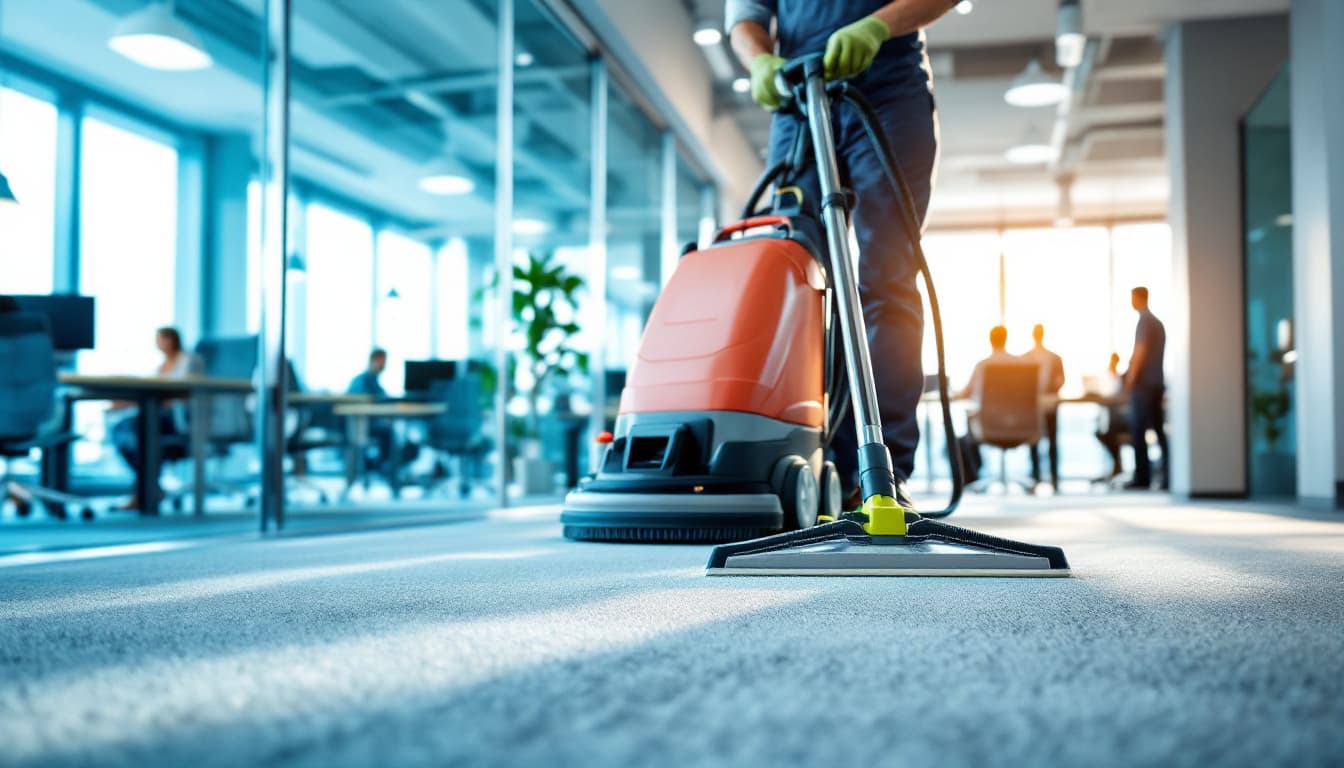
- Machine-scrub the dissolved finish. A low-speed floor machine with an abrasive pad agitates the softened finish loose. Edges and corners the machine can't reach are done by hand.
- Pick up the slurry and rinse — twice. The dissolved finish is vacuumed up, and the floor is neutralized and rinsed until it's genuinely clean. Any stripper residue or film left behind will keep the new finish from bonding, and that's the number-one cause of a job that peels or hazes weeks later.
- Let it dry completely. Finish applied to a damp floor clouds and fails to adhere. In Northern Nevada's dry air this step goes faster than almost anywhere in the country — one of the few local advantages in floor care.
- Apply thin, even coats. Four to six coats go down, each one thin and allowed to dry before the next. Thin coats level and cure properly; thick coats stay soft, powder, and yellow. Corners and edges are cut in with a smaller applicator so coverage is uniform.
- Cure before traffic returns. The finish needs hours to harden. Returning furniture or foot traffic too early prints the surface and undoes the coats.
If a provider promises a full strip and wax done in an hour with the room back in service immediately, something in that list is being skipped — almost always the rinse or the cure.
Why Northern Nevada Is Especially Hard on Floor Finish
Our high-desert climate attacks floor finish from two directions, and both shorten the interval between refinishing jobs.
- Fine, abrasive grit. The same airborne dust that settles into carpet rides in on every door cycle and acts like sandpaper on hard floors. It grinds the finish flat and dull far faster than in humid regions. Serious entry matting — a coarse scraper mat outside and an absorbent mat inside — stops roughly 80% of it before it ever reaches the tile, which is the cheapest floor-protection money you'll ever spend.
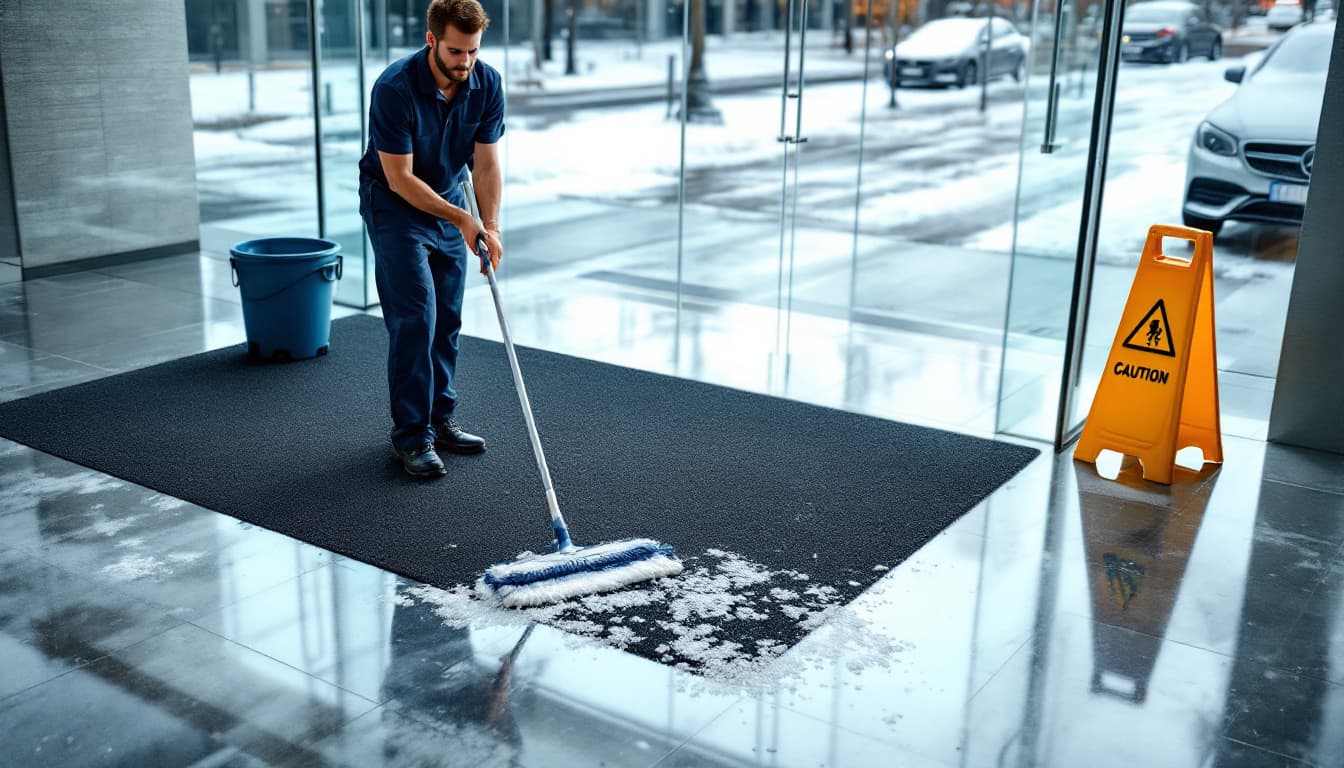
- Winter ice-melt salt. Calcium- and magnesium-chloride tracked in from parking lots leaves a white haze that etches finish and draws moisture into seams. In Tahoe and the higher-elevation communities, this is a months-long assault, not an occasional event.
The takeaway: a maintenance schedule copied from a coastal facility will leave Northern Nevada floors dull well before the next scheduled visit. Frequency has to be set to local conditions, not a national template — the same lesson that runs through our cleaning frequency guide.
How Often Should Commercial Floors Be Refinished?
There's no single number, but these ranges hold up well across the region when a floor is being maintained with regular daily care and periodic burnishing:
- Light traffic (private offices, low-visitor suites): full strip and wax once a year, with a scrub-and-recoat at the six-month mark.
- Moderate traffic (general office, professional buildings): full strip every 9-12 months, plus a recoat each quarter on the main lanes.
- Heavy traffic (lobbies, corridors, retail, clinics, schools): full strip every 6-9 months, with monthly recoats and frequent burnishing to hold the gloss.
- Medical and clinical spaces: driven by infection-control protocol and appearance both — see our approach to medical office cleaning.
Between refinishing jobs, daily dust-mopping and prompt spill cleanup do more to preserve finish than any single strip-and-wax. Grit left on the floor is the enemy; removing it every day is what stretches the interval. Our guide to keeping a facility cleaner between professional visits covers the in-house habits that protect the investment.
Burnishing: The Habit That Holds the Shine
Between a recoat and the next strip, high-speed burnishing is what keeps a floor looking freshly done. A burnisher spins a soft pad fast enough to heat and polish the top of the cured finish, closing micro-scratches and restoring gloss without adding a coat. On a heavy-traffic lobby it might run weekly; on a quiet office, monthly. It's low-cost, fast, and the difference between a floor that looks sharp all year and one that only looks good the week after it's waxed.
Not Every Floor Gets Waxed
Strip and wax is for finishable resilient floors — vinyl composition tile (VCT) above all, plus some sheet vinyl and certain sealed surfaces. It is emphatically not for every hard floor, and applying finish to the wrong surface causes damage:
- Luxury vinyl plank (LVP), laminate, and hardwood carry their own factory wear layer or finish and should never be waxed — doing so voids warranties and creates a hazy buildup that's miserable to remove. These surfaces have entirely different protocols, covered in our guide to caring for hardwood, LVP, and laminate floors.
- Polished concrete, sealed stone, and tile are maintained by their own methods, not acrylic finish.
- Carpet is a separate discipline entirely — see commercial carpet cleaning methods.
Most facilities run a mix of all of these, which is exactly why treating every floor the same is the fastest way to ruin an expensive one. Matching the method to the surface is the core of a real floor care program. When a floor genuinely has reached the end of its life and needs replacing rather than refinishing, the team at Landmark Flooring works across the Reno, Carson City, and Tahoe corridor and is a solid local reference.
The Bottom Line
A dull commercial floor is rarely a worn-out floor — it's a finish that's done its job and is ready to be renewed. Strip and wax, on the right schedule and backed by daily dust-mopping and periodic burnishing, keeps hard floors looking new and defers the real expense: replacing tile that never had to wear out in the first place. If your floors are graying in the traffic lanes, hazing after cleaning, or getting stripped every time they lose their shine, the problem isn't the floor — it's the program behind it.
Benchmark builds floor care into office cleaning and janitorial programs around each building's real traffic and surface mix — with proper stripping, thin even coats, burnishing to hold the gloss, and an honest recommendation on how often you actually need a full strip versus a quick recoat. Call (775) 530-0456 or request a free quote and we'll walk your facility with you.
Related Reading
Ready for a Cleaner Workspace?
Get a free, no-obligation cleaning plan customized for your Northern Nevada business.