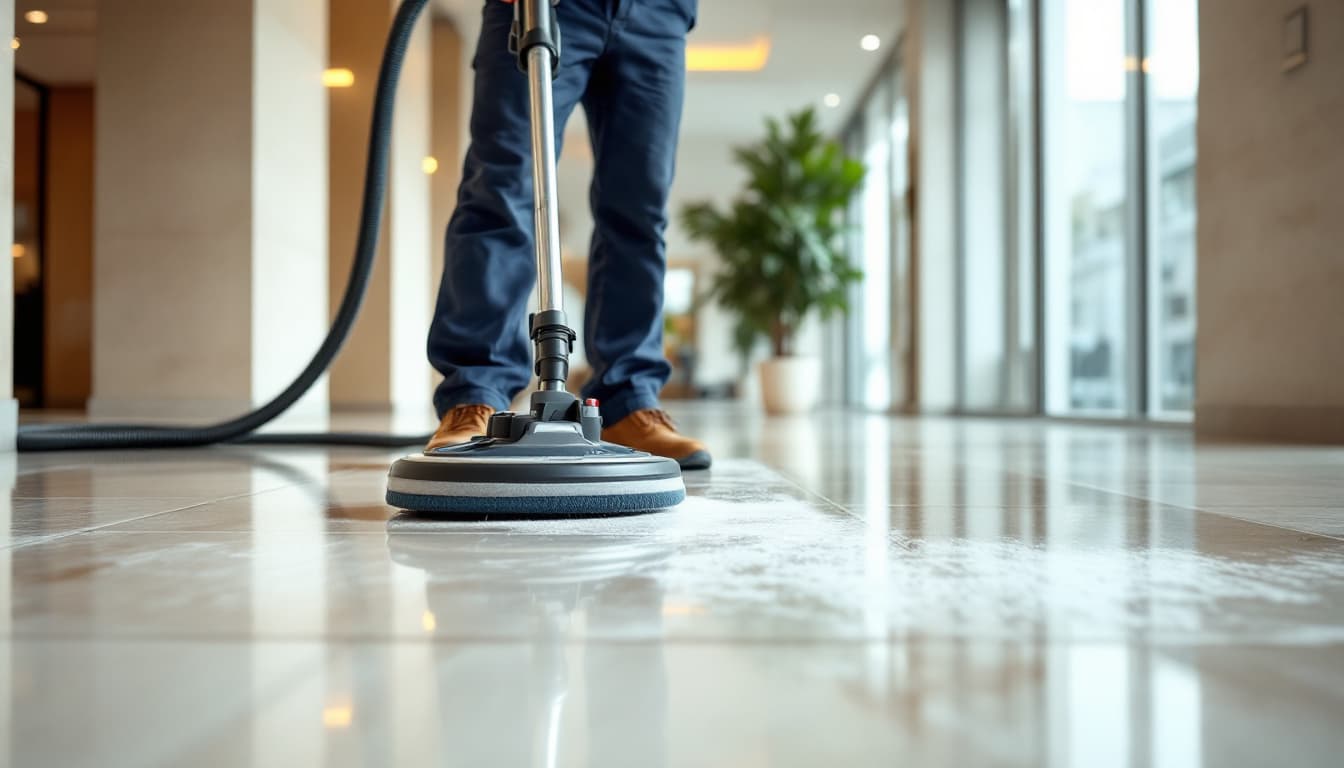
Here's a number that reframes how you should think about keeping a building clean: by most industry estimates, around 80% of the dirt, dust, and grit inside a commercial building didn't originate there — it walked in on the soles of shoes and the wheels of carts. And the overwhelming majority of that soil is either captured or missed in the first few feet past your front door. Which means the single most cost-effective floor-care decision most building owners never think about isn't a stronger floor finish or a more frequent cleaning schedule. It's matting.
A properly specified walk-off matting system is the cheapest, most passive floor protection you can install. It works 24 hours a day, needs no labor beyond routine cleaning, and pays for itself by reducing everything downstream of it — wear on your floors, hours spent cleaning, and the slip-and-fall risk that hides in a wet lobby. This guide explains how entrance matting actually works, how to build a system that captures soil instead of just decorating the doorway, and why it matters even more heading into a Northern Nevada winter.
The Economics of Soil You Stop at the Door
Think of every particle of grit tracked past your entrance as a tiny piece of sandpaper. Underfoot traffic grinds that grit into your flooring all day — abrading the finish on VCT and other resilient floors, dulling hardwood, LVP, and laminate, and working its way down into the pile and backing of carpet where no vacuum fully reaches. Soil that gets past the entrance doesn't just make a floor look dirty; it physically shortens the floor's life.
The cleaning math is just as lopsided. Industry maintenance figures have long pegged the cost of removing a single pound of soil from inside a building — through vacuuming, mopping, extraction, and eventually refinishing — at several dollars per pound once labor is counted. Stopping that same pound at the door with matting costs a fraction of it. Every pound of grit a mat holds is a pound your crew doesn't have to chase across the whole building, and a pound that never gets ground into a floor you'll otherwise have to strip and refinish sooner than you planned.
Why One Mat at the Door Isn't a System
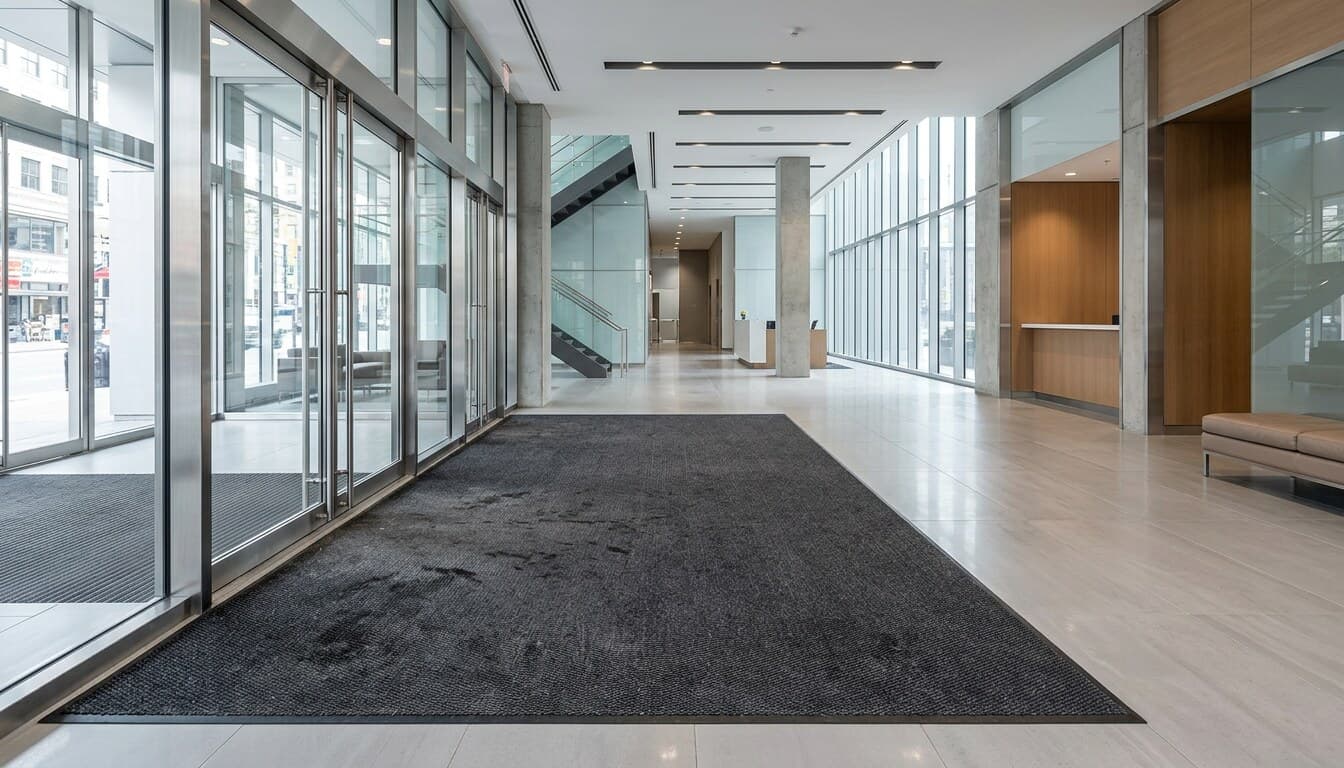
Most buildings have "a mat" — a single pad thrown down inside the entrance, often too small, usually the wrong type for the job. That's not a matting system, and it's why so many lobbies still track in soil despite having something on the floor. Capturing soil properly is a three-stage process, and each stage does a different job:
- Stage one — the outdoor scraper mat. A coarse, aggressive-surface mat outside or in the vestibule knocks the heavy stuff loose: mud, sand, gravel, snow, and ice melt. Its job is to scrape, not to absorb.
- Stage two — the transition mat. Just inside the door, a combination scraper-wiper mat removes the finer grit the first mat loosened and begins pulling moisture off the shoe.
- Stage three — the interior wiper mat. Further in, a soft, absorbent wiper mat finishes the job, drying the sole so the first step onto your actual flooring is a clean, dry one.
The rule of thumb cleaning professionals use: it takes roughly 12 to 15 feet of matting for a person to walk their shoes clean. A single 3-foot mat captures only the first step or two; everything after that lands on your floor. That's the difference between a mat that looks like it's doing something and a system that actually is.
Right Mat, Right Place
Matching the mat to the location matters as much as the length. A plush interior wiper mat placed outside turns into a sopping, muddy hazard; a stiff scraper mat placed deep inside does nothing but trip people. A few specifics worth getting right:
- Size the mat to the doorway and traffic, not to whatever was in the supply closet. Wider, longer mats at busy entrances capture dramatically more than an undersized pad.
- Insist on a rubber-backed, beveled-edge mat. Curled corners and sliding mats are a leading trip hazard — and a mat that slides is a floor that isn't protected where the mat used to be.
- Use low-profile mats where carts and wheelchairs roll so the matting is ADA-friendly and doesn't become its own obstacle.
- Add matting at side and loading entrances too. Soil doesn't only come through the main lobby; a back door with no mat quietly feeds grit to the whole building.
A Mat Only Works If It's Maintained
Here's the catch most buildings miss: a saturated mat stops working. Once the fibers are packed with soil and moisture, a mat can't hold any more — and a waterlogged mat actually becomes a slip hazard itself, pushing water back out onto the floor it was supposed to protect. Matting has to be part of your cleaning scope, not a set-and-forget purchase:
- Vacuum entrance mats daily in any meaningful traffic — they fill up faster than any other surface in the building.
- Deep-clean them on a cycle with hot-water extraction, the same method used for carpet, to flush out the embedded grit a vacuum leaves behind.
- Swap in dry mats during wet weather. High-traffic winter entrances often need mats changed out mid-day, which is exactly the kind of task a day porter handles before a wet lobby becomes a fall.
- Check the backing and edges for curling and wear, and retire mats that have gone flat or slick.
Knowing how often each of these should happen is part of building a complete program — the same thinking behind our guide to cleaning frequency and the quick wins in our facility maintenance tips between cleanings.
Why Matting Matters More Through a Northern Nevada Winter
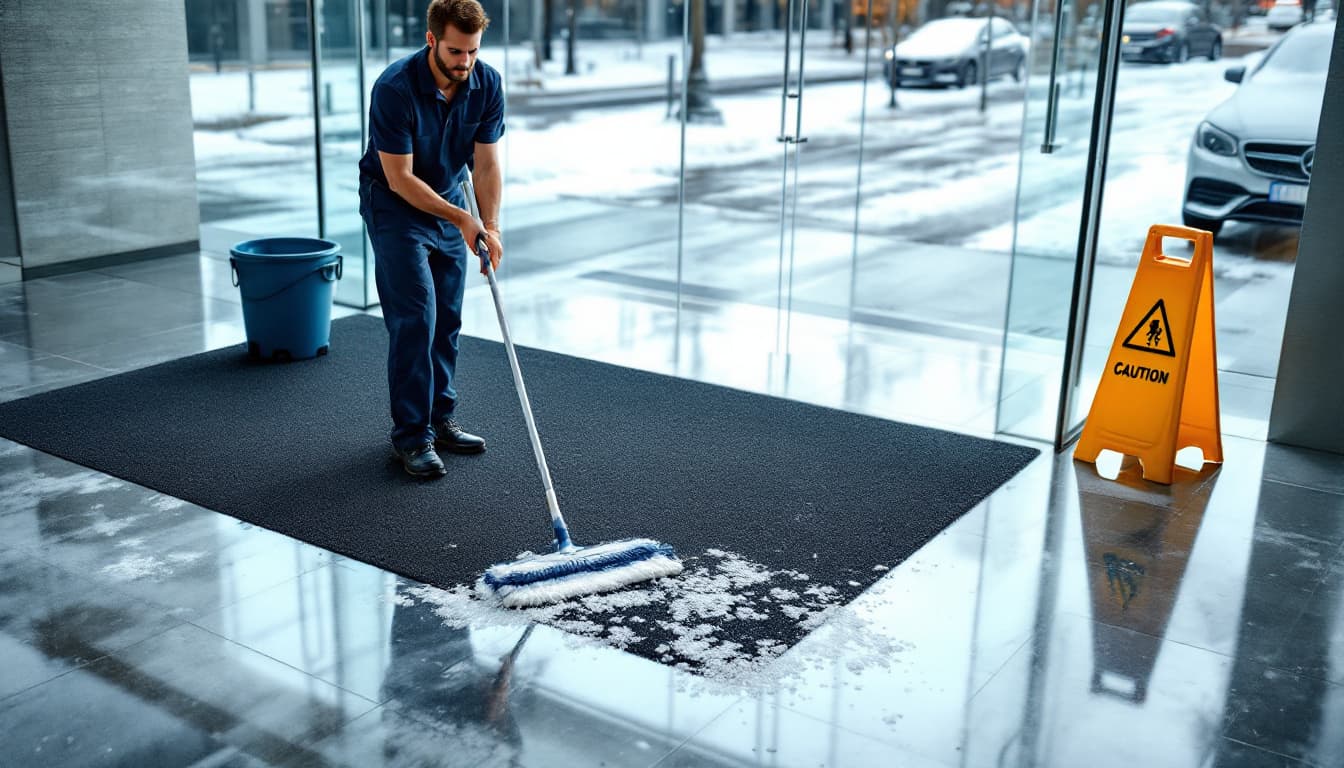
Entrance matting earns its keep year-round, but our region's winters raise the stakes. Snow, slush, and the salt and ice-melt tracked in across the Reno–Sparks, Carson Valley, and Tahoe area are brutal on floors: the moisture dulls finishes and the salt leaves white, crystalline residue that etches hard surfaces and bleaches carpet if it isn't stopped at the door. A strong matting system is the first line of defense against all of it — it catches the slush before it melts across your lobby and traps the ice-melt granules before they grind into the floor.
It's also a safety issue. A wet winter entrance is where slip-and-falls happen, and a well-maintained matting system that keeps the floor dry is one of the simplest liability reducers a building can have. The dry step a good mat system delivers isn't just cleaner — it's safer. And on the grout-and-tile entrances common in Northern Nevada lobbies, stopping that salty moisture at the mat is what keeps you from fighting the dark, deteriorating grout lines we cover in our guide to commercial tile and grout cleaning.
The Bottom Line
Entrance matting is the rare floor-care investment that's cheap, passive, and pays for itself twice — once in the cleaning labor it saves and again in the floor life it protects. But it only works if it's a real system: a three-stage run of the right mats, sized to your traffic, placed at every entrance, and cleaned on a schedule so they keep capturing soil instead of pushing it back out. Get the first 15 feet right and you've solved most of your building's dirt problem before it ever reaches the floor.
Benchmark builds entrance matting and floor protection into our floor care, office cleaning, and janitorial programs across Reno-Sparks, Carson City and Dayton, Minden and Gardnerville, and the Lake Tahoe area. Call (775) 530-0456 or request a free quote, and we'll walk your entrances and build a matting and floor-care plan that keeps the soil outside where it belongs.
Related Reading
Ready for a Cleaner Workspace?
Get a free, no-obligation cleaning plan customized for your Northern Nevada business.