Winter is the hardest season of the year on a commercial floor, and almost none of the damage is obvious while it's happening. There's no dramatic spill, no cracked tile — just a slow, daily grind of melted snow, chalky salt residue, and fine grit tracked in on the bottom of every shoe. By the time the snow clears in spring, the floor that looked fine in October is dull, hazed white, and worn along every walking path. The repair bill lands months after the cause, which is exactly why so many Northern Nevada businesses never connect the two.
The good news: winter floor damage is almost entirely preventable, and the fix is far cheaper than the refinishing it saves you. This guide covers what actually damages your floors between November and March, why a proper entrance matting system is the single best investment you can make, and the cold-weather routine that keeps floors intact until spring.
What Actually Damages Floors in Winter
Three things do nearly all the harm, and they work together.
- Ice-melt salt. The sidewalk de-icers that keep your entrance safe — rock salt, calcium chloride, magnesium chloride — get tracked inside on every shoe. On the floor, they leave a chalky white residue that's mildly corrosive. On hard floors it attacks and clouds the finish; on carpet, the alkaline salts break down fibers and leave stiff white crusting that ordinary vacuuming won't lift.
- Grit and sand. The same crews that salt the roads also sand them, and that abrasive grit rides in on shoes. Underfoot it acts like sandpaper, scratching finish and grinding down high-traffic lanes faster than anything else all year. This is the damage you see as dull "traffic patterns" down hallways and inside doorways.
- Standing moisture. Melting snow and slush pool right inside the entrance. Left there, water seeps into grout lines, tile seams, and the edges of resilient flooring, and it's the number-one enemy of hardwood and laminate — the exact problem we covered in our guide to caring for hardwood, LVP, and laminate floors.
Put them together and the entrance of your building takes 80% of the abuse. That's not a problem to spread evenly across the floor plan — it's a problem to intercept at the door.
The White Haze: Salt Residue and Your Floor Finish
That dull, whitish film that shows up on tile and polished floors every winter is salt residue, and it's a warning sign, not just a cosmetic one. Ice-melt salts are alkaline and hygroscopic — they pull moisture out of the air and stay slightly damp, which keeps them working against your floor's finish long after they've dried to the eye. A plain-water mop makes it worse: it re-dissolves and smears the salt around instead of removing it, and leaves enough behind to re-crystallize into a haze as it dries.
Removing salt correctly takes a neutral or slightly acidic salt-neutralizing cleaner, not a standard alkaline floor cleaner (alkaline-on-alkaline does nothing to lift it). This is one of those unglamorous technique details — like the dwell time and two-step method behind real disinfection — that separates a floor that's actually clean from one that just got pushed around with a wet mop. A trained janitorial crew carries the right product and knows winter floors need it.
Entrance Matting: The Cheapest Floor Protection You Can Buy
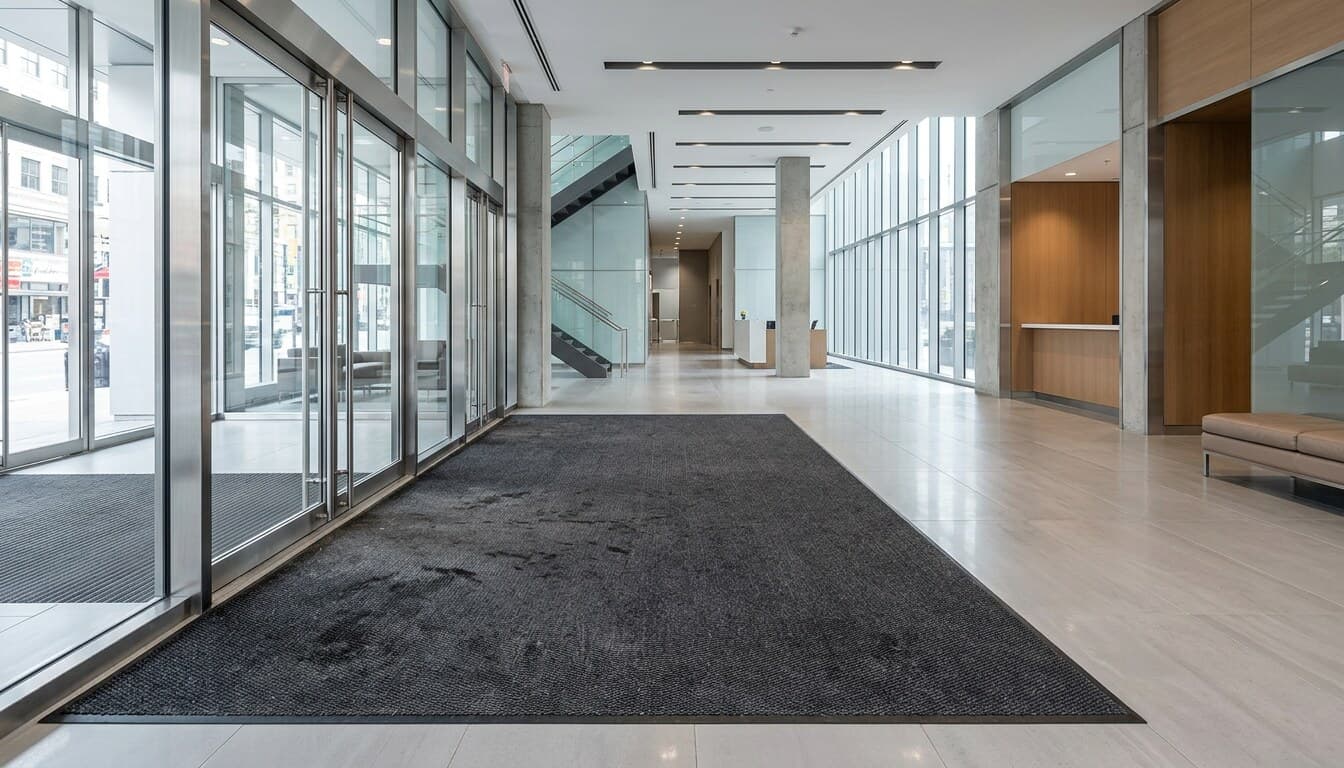
If you do only one thing this winter, do this. A proper entrance matting system stops salt, grit, and water at the door — before they ever reach your finished floors. The vast majority of the dirt and moisture inside a building walks in through the front door, and matting is what catches it. A real system has three zones:
- Scraper matting outside or at the threshold — coarse, aggressive texture that knocks off snow, slush, and the biggest chunks of grit before anyone steps inside.
- Wiper-scraper matting just inside the door — the workhorse zone that scrubs the shoe and pulls off salt and remaining grit.
- Wiper matting beyond that — softer, absorbent material that dries the sole so the first step onto your actual floor is a clean, dry one.
The rule of thumb the industry uses: a person needs to take several full steps on matting for it to do its job, which means 15 to 25 feet of matting from the entrance, not the single 3-foot mat most buildings settle for. Mats also have to be kept clean to keep working — a mat saturated with salt and water is just a wet sponge that re-deposits everything. During winter that means vacuuming or swapping mats on a real schedule, which folds naturally into a between-cleanings maintenance routine.
Turn Up the Frequency Where the Traffic Is
Winter is the wrong season to hold cleaning steady. The entrance and main circulation paths need attention more often — ideally daily — while back offices and low-traffic areas can stay on their normal rhythm. The winter floor routine that works looks like this:
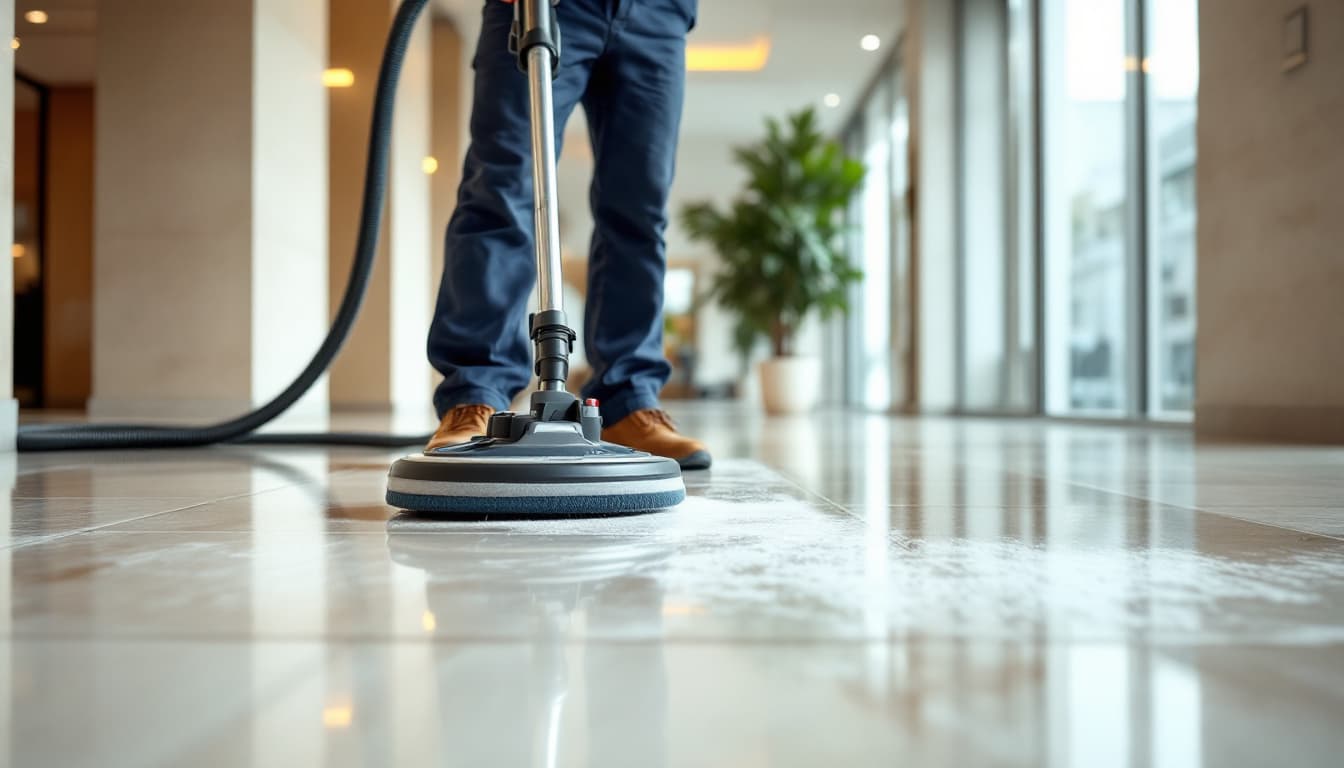
- Dust-mop or vacuum high-traffic lanes daily to lift abrasive grit before it gets ground into the finish. This one habit does more to preserve a floor than any other.
- Damp-mop entrances and lobbies with a salt-neutralizing cleaner, not plain water, to actually remove residue instead of spreading it.
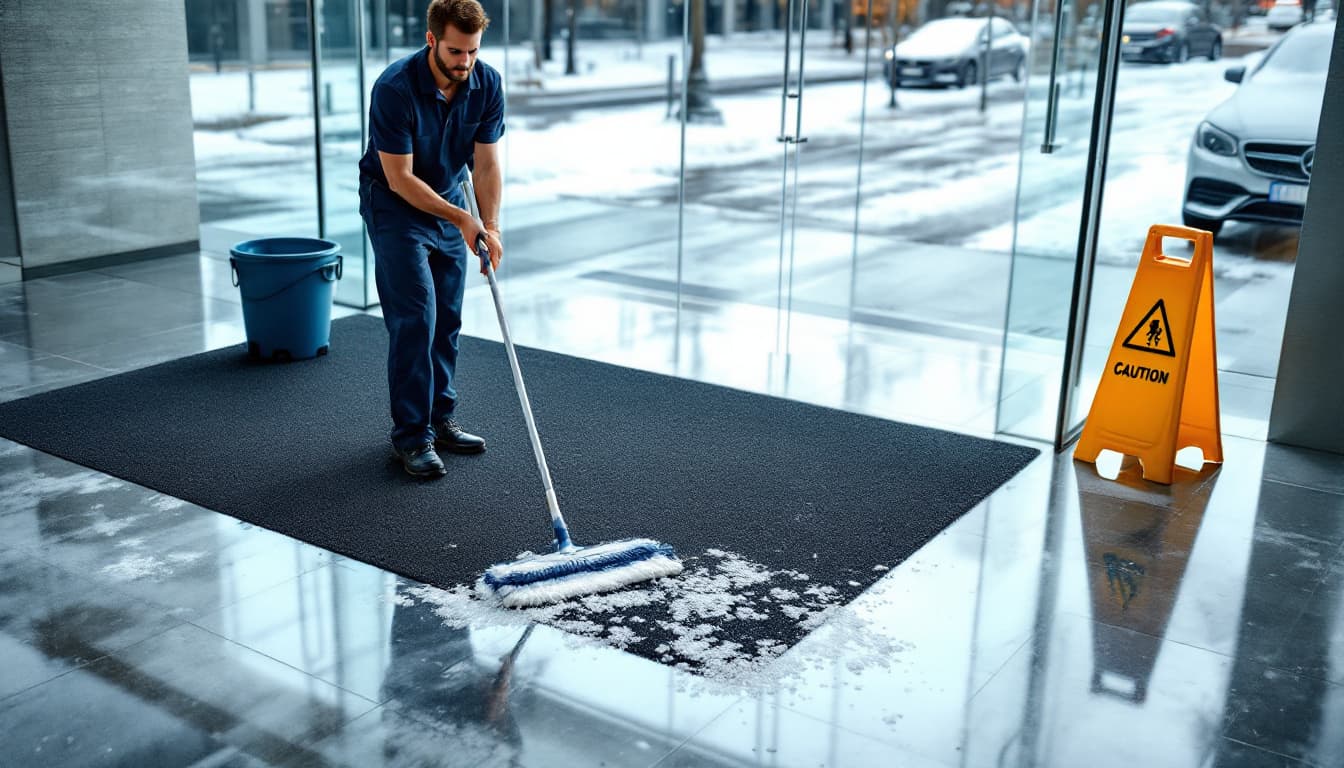
- Deal with slush and standing water promptly so it never has time to seep into seams and grout — and so it never becomes a slip hazard.
- Keep mats clean and cycle them as they load up with salt and moisture.
This is the same principle behind our cleaning frequency guide: match the schedule to how the space is actually being used, and in winter the entrance is being used harder than any other spot in the building.
Different Floors, Different Winter Weak Points
The strategy shifts a little by surface:
- VCT, tile, and polished hard floors: salt haze and grit scratching are the enemies. Consistent dust-mopping plus neutral-cleaner damp mopping holds the finish; the reward is that a floor protected through winter needs stripping and refinishing far less often, which is where the real money is saved.
- Carpet and entry rugs: salt crystals are abrasive and alkaline, cutting carpet life short from the inside. They need to be extracted, not just vacuumed — which is exactly what hot-water extraction and encapsulation are built to do. A mid-winter extraction pulls out embedded salt before it does permanent damage.
- Hardwood, LVP, and laminate: moisture is the whole ballgame. Fast water removal and controlled humidity matter more than anything, per our wood-floor climate guide.
The Liability Nobody Budgets For: Slip-and-Falls
Winter floor care isn't only about protecting the finish — it's about protecting the business. A wet, slushy entrance is one of the most common slip-and-fall settings there is, and those claims are expensive and entirely foreseeable. The same matting-and-frequency plan that saves your floors also keeps the entrance dry, and pairing it with visible wet-floor signage during storms is basic due diligence. It's the floor-care side of the same risk management we laid out in our OSHA compliance guide.
Why Northern Nevada Winters Make This Non-Negotiable
Our region is tougher on floors than a milder climate would be. The high desert runs through a hard freeze-thaw cycle — snow and slush by morning, dry and dusty by afternoon — so buildings get hit with both moisture and abrasive grit in the same day, over and over. The Lake Tahoe corridor deals with serious snowfall and the heaviest ice-melt and sand use of anywhere we serve, while Reno-Sparks and Carson City and Dayton get enough winter weather to track salt in for months. A floor-care plan built for a mild climate simply doesn't hold up here.
The Bottom Line
Winter floor damage is slow, quiet, and almost completely preventable. The businesses whose floors still look sharp in spring aren't lucky — they intercepted the salt, grit, and water at the door with real matting, turned up cleaning frequency where the traffic actually is, used the right products to remove residue instead of smearing it, and kept the entrance dry and safe. Do that, and you protect both your floors and everyone who walks across them, and you push expensive refinishing years down the road.
Benchmark builds winter floor protection into floor care, carpet cleaning, office cleaning, and janitorial programs across Reno-Sparks, Carson City and Dayton, and the Lake Tahoe corridor — entrance matting systems sized to the door, salt-neutralizing floor routines, mid-winter carpet extraction, and crews who know the difference between a mopped floor and a protected one. Call (775) 530-0456 or request a free quote and we'll build a winter floor plan around your building before the first storm.
Related Reading
Ready for a Cleaner Workspace?
Get a free, no-obligation cleaning plan customized for your Northern Nevada business.