Walk into almost any commercial building with tile floors and look down at the grout. In the lobby, the restroom, the break room, the clinic hallway — the tile itself usually looks fine. The grout lines between them tell a different story: gray where they started white, dark brown where they started gray, and nearly black in the traffic lanes and around the base of every toilet. The floor gets mopped every night. It still looks dirty. That's not a cleaning-crew failure. It's a grout problem, and a mop was never going to fix it.
Grout is the most neglected surface in most commercial buildings, and it's also one of the most visible. This guide explains why grout gets dirty in a way tile doesn't, why routine mopping can actually make it worse, what professional tile and grout cleaning involves, and how often Northern Nevada businesses should plan for it.
Why Grout Gets Dirty When Tile Doesn't
Tile — especially glazed ceramic and porcelain — is dense and nearly non-porous. Dirt sits on top of it, and a mop lifts it off. Standard cementitious grout is the opposite. It's a sand-and-cement mix full of microscopic pores, and it sits a fraction of an inch below the tile surface. That combination makes it a trap:
- It's porous. Unsealed or worn-sealed grout absorbs liquid like a sponge. Spilled coffee, tracked-in water, cleaning solution, and in restrooms, urine all soak into it and carry soil down with them.
- It's recessed. Every grout line is a small channel. Dirty mop water flows into those channels and settles there as the floor dries. The tile ends up clean; the grout ends up holding the residue.
- It's textured. The rough surface grips fine grit and body oils that slide right off glazed tile, and it holds onto them through ordinary daily cleaning.
The result is predictable: tile that looks clean surrounded by grout that looks filthy. Because the eye reads the whole floor at once, a building with dark grout looks dirty even on the morning after a thorough clean.
How Routine Mopping Makes It Worse
This is the part most facility managers don't expect. A string mop and bucket is the default tool for tile floors, and over time it is often the main cause of dark grout. After the first few passes, the mop water isn't clean anymore — it's diluted soil. Spread across the floor, that water runs into the grout lines and dries there. Do that every night for a year and you've dyed the grout with your own dirty water.
The chemistry adds to the problem. Too much neutral cleaner, or the wrong product, leaves a sticky film that attracts new soil faster. Strong acid cleaners used for quick results etch cementitious grout, opening its pores and making it absorb even more. And in restrooms, a surface mop simply can't reach the uric-acid salts that crystallize inside grout and keep releasing odor — the same issue we cover in our guide to commercial restroom sanitation.
Better daily practice helps a lot: change mop water often, use a flat microfiber mop or an auto-scrubber that picks up its own water, and measure cleaning chemicals instead of guessing. But once soil has worked deep into the grout, daily cleaning won't pull it back out. That takes a restorative clean.
What Professional Tile and Grout Cleaning Involves
Restorative tile and grout cleaning is a different process from the nightly mop. A proper job, done as part of a commercial floor care program, usually follows these steps:
- Assessment. Identify the tile type (glazed ceramic, porcelain, natural stone, quarry tile) and grout type (cementitious or epoxy), and check the condition of any existing sealer. Natural stone like marble and travertine is acid-sensitive and needs a completely different chemistry than porcelain.
- Pre-treatment. Apply a professional-grade alkaline cleaner matched to the soil — grease in kitchens, body oils and tracked-in soil in lobbies, organic buildup in restrooms — and give it enough dwell time to break the soil down.
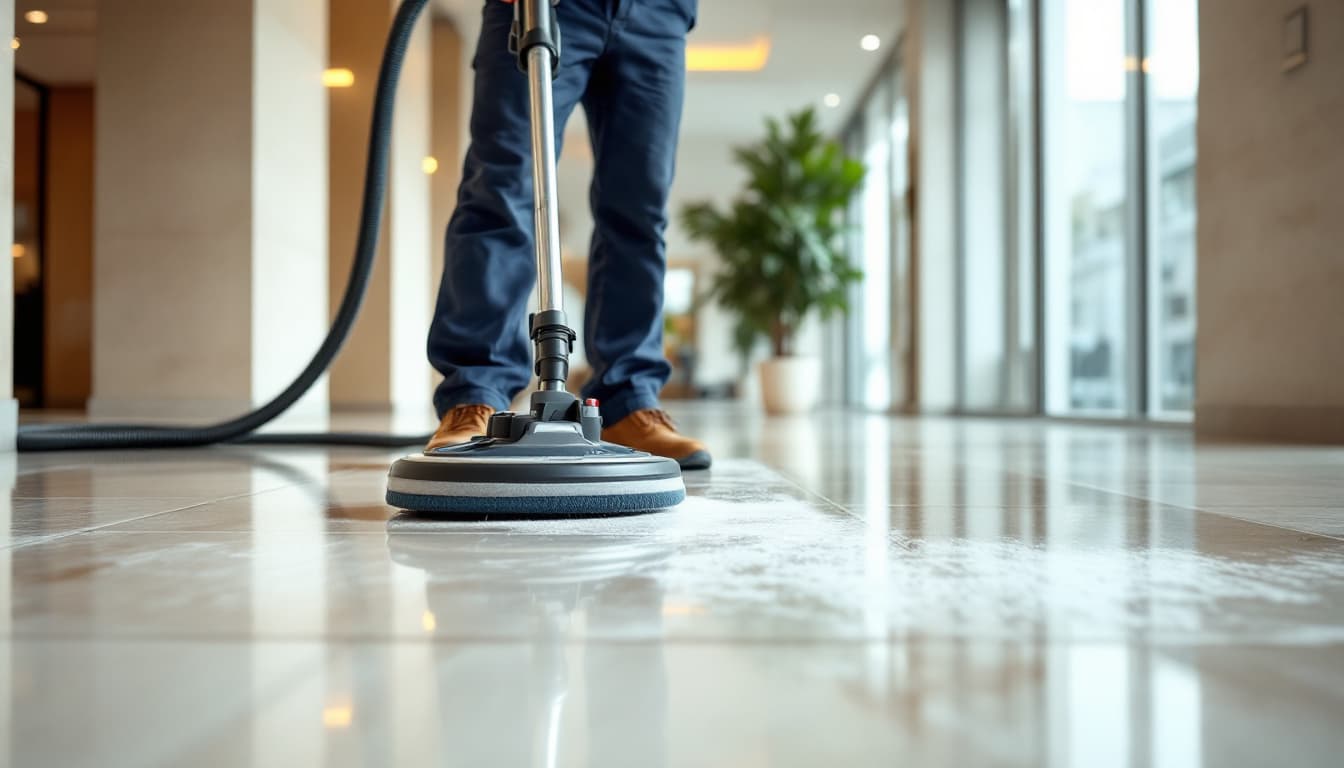
- Agitation. Work the grout lines with rotary brushes or a grout-specific brush tool so the cleaner reaches into the pores, not just across the surface.
- High-pressure hot-water extraction. This is the step that makes the difference. A hard-surface extraction tool flushes the grout with hot water and vacuums it back up in the same pass, lifting out the loosened soil instead of leaving it to dry in place.
- Rinse and neutralize. Remove cleaner residue so the floor doesn't re-soil quickly and the pH is right for sealing.
- Sealing. Once the grout is clean and fully dry, apply a penetrating sealer. Sealed grout resists absorbing spills and soil, so it stays clean longer and responds to daily mopping again.
Where grout is stained beyond cleaning, color sealing is an option: a tinted sealer that restores a uniform grout color and adds a durable protective layer. Where grout is cracked, crumbling, or missing, it needs regrouting — cleaning can't fix structural damage, and moisture getting under the tile through broken grout is how small problems turn into loose tile.
Where Clean Grout Matters Most
Every tiled floor benefits from clean grout, but some spaces depend on it:
- Restrooms. Grout around toilets and urinals is the main source of lingering restroom odor. Deep-cleaning and sealing it often does more for a restroom's smell than any air freshener.
- Medical and dental offices. Porous grout can harbor bacteria that surface disinfection doesn't fully reach. For clinics, exam rooms, and waiting areas, clean, sealed grout is part of a sound medical office cleaning and infection-control program.
- Commercial kitchens and break rooms. Grease soaks into grout quickly, turning it dark and slick. Clean grout in food-prep areas is a sanitation issue and a slip-safety issue.
- Lobbies and entrances. The first floor every visitor sees takes the most traffic and the most tracked-in grit, so grout here darkens fastest and is noticed most.
How Often Should You Deep-Clean Grout?
Frequency depends on traffic and use, the same principle we cover in our commercial cleaning frequency guide. As a starting point:
- Restrooms, commercial kitchens, and busy entrances: every 3 to 6 months.
- Medical facilities and high-traffic lobbies: every 6 months, with sealing checked each time.
- Standard office break rooms and corridors: every 6 to 12 months.
- Resealing: most penetrating sealers need renewal every 1 to 2 years in commercial traffic. A simple test: put a few drops of water on the grout. If it darkens and soaks in within a few minutes, the sealer is worn.
Scheduling grout work alongside other periodic floor care keeps disruption down. Many buildings pair it with the annual strip-and-wax cycle on their VCT floors, or with carpet extraction, so all the restorative floor work happens in one after-hours window.
Northern Nevada Adds Its Own Challenges
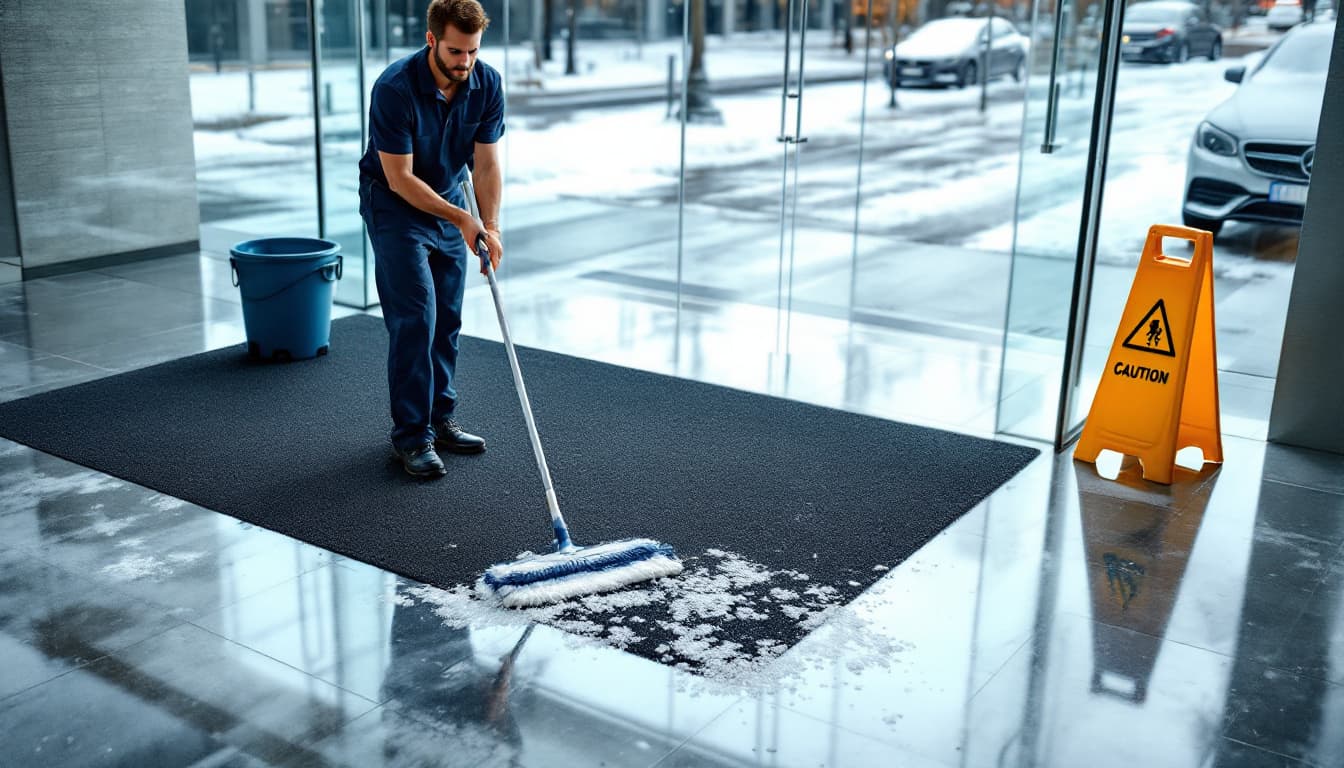
Our climate is hard on tile floors in two ways. First, the fine high-desert dust that blows in year-round is abrasive and gets ground into grout lines by foot traffic. Second, winter brings snow, slush, and ice-melt salts through every entrance. Salt residue is alkaline and chalky, and when it dries in grout lines it leaves a white haze and wears down the sealer — part of why winter floor protection starts with entrance matting. Fall is a smart time to deep-clean and reseal tile, especially at entrances: freshly sealed grout goes into the salt season protected rather than already open and absorbing.
Keeping Grout Clean Between Deep Cleans
A few daily habits extend the results of a professional clean:
- Use a pH-neutral cleaner at the correct dilution for daily mopping. Save acid and heavy-alkaline products for trained technicians.
- Change mop water often, or switch to flat microfiber mops or an auto-scrubber so dirty water isn't spread into the grout lines.
- Clean up spills quickly, especially coffee, soda, and grease, before they soak in.
- Keep entrance mats in place and clean, so less grit and salt reaches the tile.
- Watch for trouble spots — darkening around toilets, cracked grout lines, loose tiles — and address them before they spread.
Our list of maintenance tips between professional cleanings covers more habits that keep your whole facility looking its best.
The Bottom Line
Dark grout makes a clean building look dirty, and ordinary mopping won't bring it back. Hot-water extraction, followed by sealing, restores grout to close to its original color and keeps it that way for far longer. For most commercial tile floors, it's also far cheaper than replacing tile that just needed a proper clean.
Benchmark provides tile and grout cleaning as part of our floor care and janitorial programs across Reno-Sparks, Carson City and Dayton, Minden and Gardnerville, and the Lake Tahoe area. Call (775) 530-0456 or request a free quote, and we'll assess your tile and grout and recommend a cleaning and sealing schedule that fits your building.
Related Reading
- Strip and Wax Explained: How Commercial Floor Refinishing Works and How Often Northern Nevada Businesses Need It
- Commercial Restroom Sanitation: Why 'Wiped Down' and 'Sanitized' Are Not the Same Thing
- Winter Floor Protection: How Snow, Salt, and Ice Melt Quietly Destroy Commercial Floors — and the Matting Plan That Stops It
Ready for a Cleaner Workspace?
Get a free, no-obligation cleaning plan customized for your Northern Nevada business.