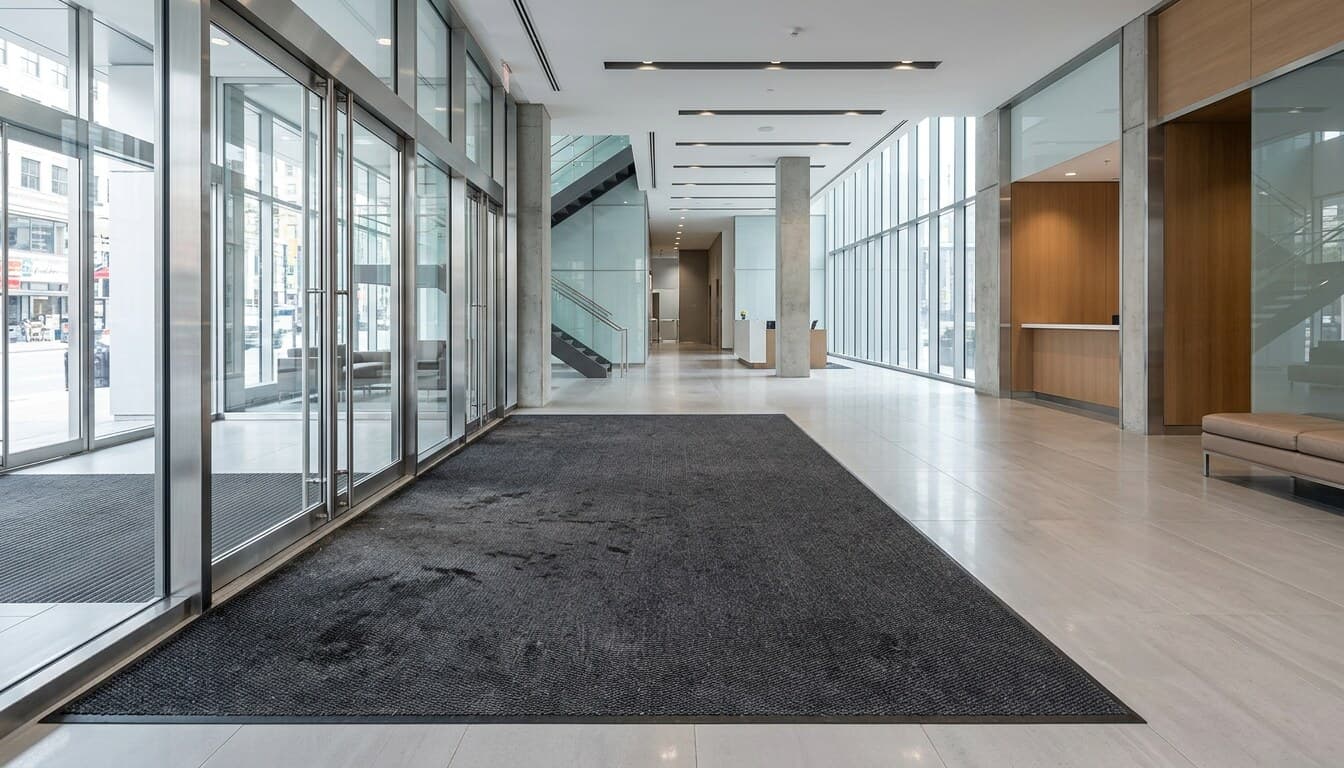
Walk into a building with a tired floor and you feel it before you can name it. The vinyl tile looks flat and gray, the shine is gone from the walking lanes, and every scuff and heel mark seems to catch the light. The usual assumption is that the floor is worn out and needs to be stripped down and refinished from scratch. Most of the time, that assumption is wrong — and acting on it is an expensive mistake. A floor that has simply gone dull doesn't need to be stripped. It needs to be burnished.
Burnishing is the quiet workhorse of commercial floor care: the maintenance step that lives between the big, disruptive strip-and-wax jobs and keeps a floor looking its best in the months between them. Done right, it brings back the mirror gloss, erases the scuffs, and stretches the life of the finish so you refinish far less often. Done wrong — or skipped entirely — it's the reason so many floors look exhausted long before they should. Here's how high-speed polishing actually works, why both the finish and the machine have to be built for it, and how the right schedule saves Northern Nevada businesses real money.
Burnishing, Buffing, Scrubbing: Three Different Jobs
These words get used interchangeably, and that confusion leads to floors being treated the wrong way. They're three distinct operations:
- Scrubbing cleans. A machine with a wet pad or brush and a cleaning solution lifts dirt and grime off the surface. It's about removing soil, not restoring shine.
- Buffing (or spray-buffing) runs a slower machine — often in the range of 175 to 1,500 RPM — usually with a light solution, to clean up and even out the finish and knock down minor marks.
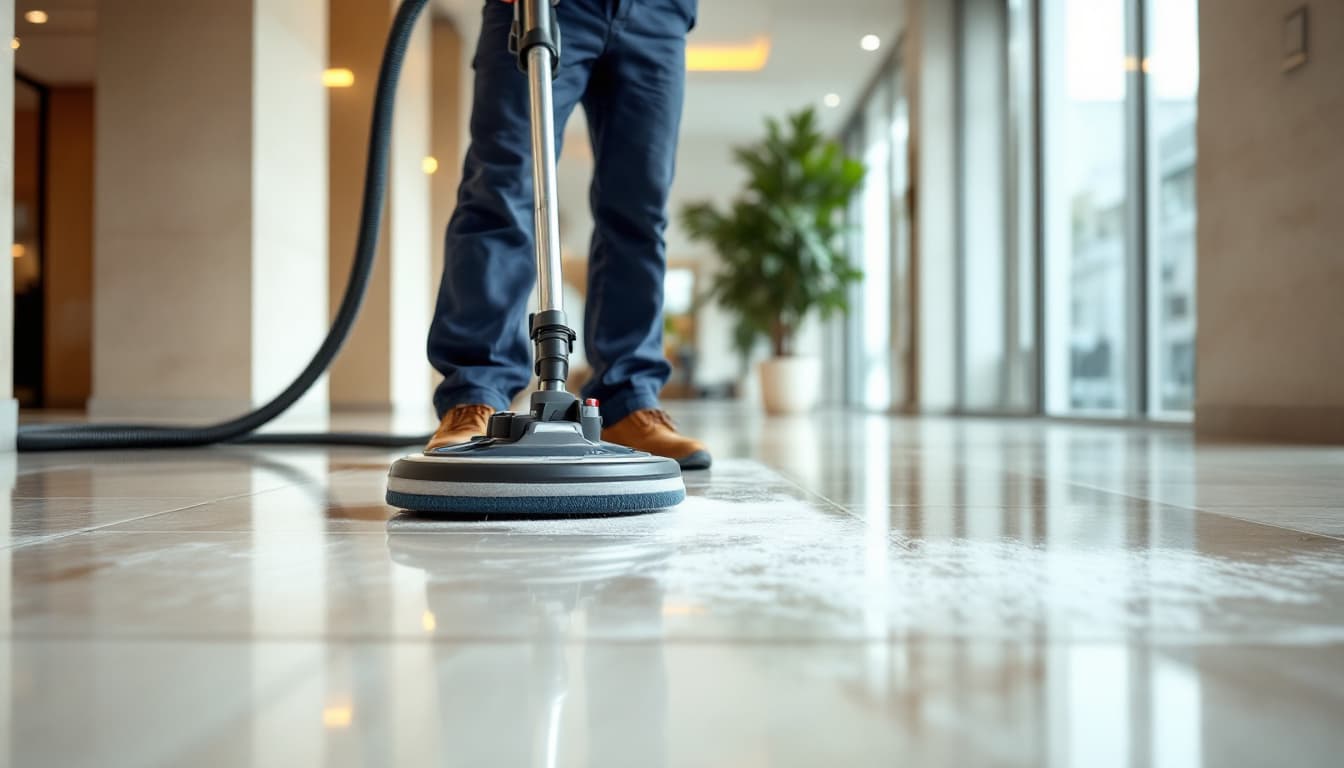
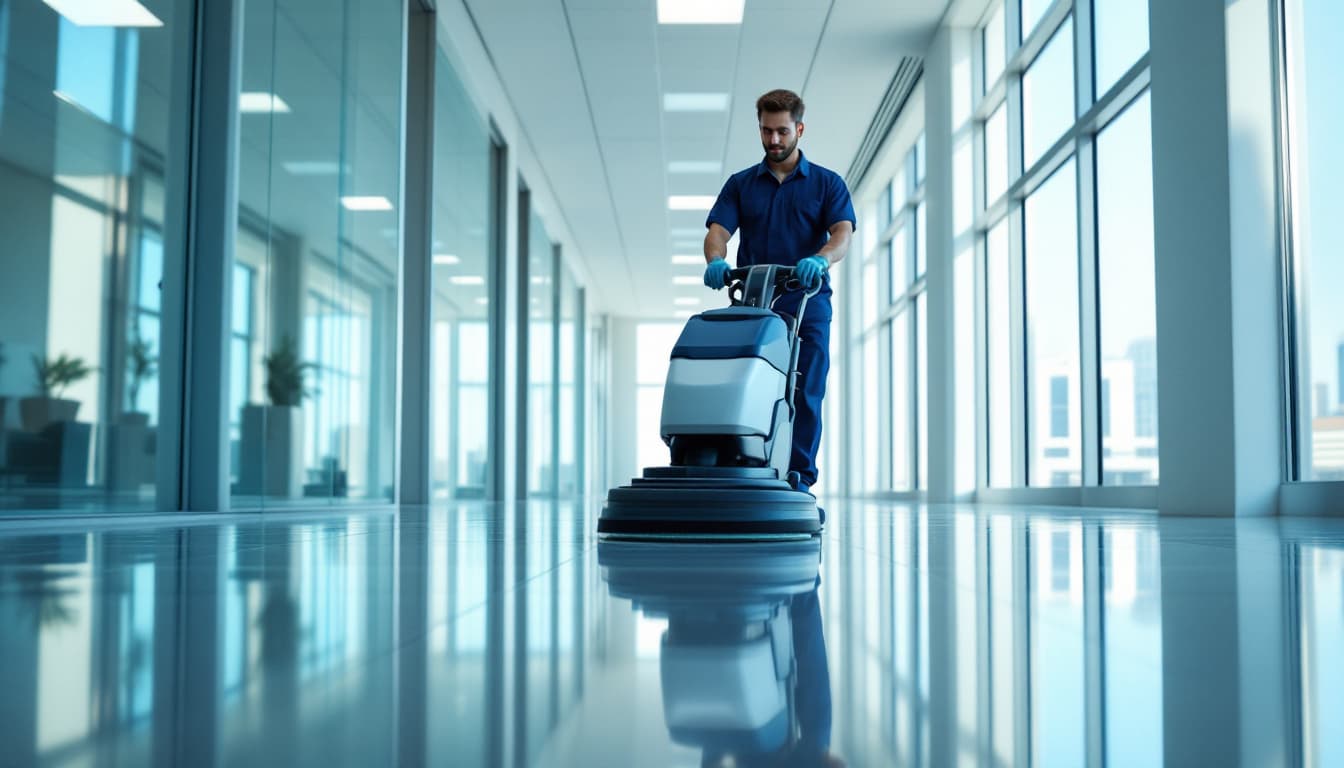
- Burnishing is the high-speed polish. The machine spins a soft pad at roughly 1,500 to 2,500 RPM — sometimes higher — in a dry pass across the finish. At that speed the pad generates friction heat that momentarily softens the top micro-layer of the floor finish and polishes it smooth, filling in micro-scratches and bringing up a deep, wet-look gloss.
That heat is the whole point, and also the catch. Burnishing literally heat-polishes and "work-hardens" the surface of the finish, which is why it both shines and toughens the floor. It's also why the machine can never stop moving mid-pass: a soft pad spinning in one spot at 2,000 RPM will burn, streak, and swirl the finish in seconds. Burnishing looks easy from across the room and is unforgiving up close — it rewards trained operators and punishes guesswork.
Burnishing Is Maintenance. Stripping Is Surgery.
The most useful way to think about it: burnishing maintains the finish you already have, while stripping and waxing replaces it. A full strip-and-wax chemically dissolves every coat of old finish down to the bare tile, then rebuilds it with fresh layers — a slow, labor-heavy, fume-heavy job that shuts the area down for hours. You don't want to do it often, and you don't have to, if you burnish in between.
Each burnishing pass takes a floor whose shine has flattened under traffic and brings it right back, without touching the finish underneath. A floor on a regular burnishing program can go far longer between strip-and-wax cycles — often doubling the interval — because the finish is being renewed and protected instead of ground down and neglected. The math is simple: a short, low-cost polish done on schedule prevents the long, high-cost refinish done in a panic.
The Finish Has to Be Built to Take It
Here's where burnishing goes sideways for buildings that try to shortcut it. You cannot burnish just any floor. The heat and speed that produce the gloss will destroy a finish that wasn't made for it — and they'll do real damage to a bare or thinly coated floor.
High-speed burnishing needs a burnishable, high-solids floor finish — the harder "UHS" (ultra-high-speed) coatings formulated with tougher resins specifically to tolerate repeated heat polishing. A floor needs enough coats of the right finish built up on it to give the pad something to work. Run a burnisher over worn-through tile with no finish left and you don't get shine; you get scorched, gouged flooring and a strip-and-wax moved up by months. This is exactly why burnishing belongs inside a planned floor-care program rather than bolted on as an afterthought — the refinishing and the maintenance polishing are two halves of one system, and the finish chosen at strip-and-wax time determines whether the floor can be burnished at all.
It's also why burnishing is a hard-floor technique, not a universal one. It's built for VCT, other resilient tile, and sealed surfaces that carry a finish — not for hardwood, LVP, or laminate, not for tile and grout, and obviously not for carpet, each of which has its own maintenance method.
The Machine Matters More Than You'd Think
Not all burnishers are equal, and the differences matter most in occupied buildings. The main split is how the machine is powered:
- Propane burnishers are powerful and untethered, which makes them fast across big open floors — warehouses, large retail, gymnasiums. The trade-off is that they burn fuel indoors: they emit exhaust that affects indoor air quality, they're loud, and they're generally reserved for after-hours work in unoccupied, well-ventilated spaces.
- Battery and corded-electric burnishers are quieter and produce no combustion fumes, which makes them the right tool for occupied offices, medical buildings, and anywhere people are working nearby. Modern battery machines now reach the same high-gloss results without the exhaust.
Just as important is dust control. Burnishing is a dry, high-speed process, and a pad spinning at 2,000 RPM throws fine finish dust into the air. A quality burnisher captures that dust with active or HEPA-grade filtration instead of scattering it across desks and shelves. In a medical office or any space with sensitive occupants, dust containment isn't a nicety; it's the reason the work can be done during business hours at all.
How Often Should a Floor Be Burnished?
There's no single answer, because frequency follows traffic. A quiet back-office suite might need a polish monthly; a busy lobby, corridor, or retail sales floor can justify weekly or even more frequent burnishing to stay ahead of the scuffing. The guiding principle is the same one behind any good cleaning-frequency plan: match the schedule to how hard the space is actually used, then hold to it. Burnishing that happens on a calendar keeps a floor permanently sharp; burnishing that happens only when someone notices the floor looks bad is always playing catch-up.
What makes burnishing pay off, though, is what happens before the machine ever comes out. A polished finish is only as good as the grit it has to survive, and in Northern Nevada that grit is relentless — fine high-desert dust most of the year and salt, sand, and ice-melt dragged in all winter. Pairing a burnishing program with real entryway matting and a winter floor-protection plan is what keeps the abrasives off the finish in the first place, so each polish lasts and the finish underneath wears slowly. The daily dust-mopping and prompt spill pickup covered in our between-cleanings maintenance guide do the same job from the other direction.
Why It's Worth It: The Payoff of a Polished Floor
Burnishing earns its place on three fronts at once. Appearance is the obvious one — a high-gloss floor reads as "this business is well run" the moment someone walks in, and a dull, scuffed one quietly says the opposite. Cost is the one that convinces facility managers: regular polishing stretches the finish and pushes expensive strip-and-wax jobs further apart, so cheap routine work displaces costly disruptive work. And protection rounds it out — the work-hardened surface resists scuffing and wear, and a properly maintained finish keeps its intended slip resistance instead of degrading underfoot.
The Bottom Line
A dull floor is rarely a worn-out floor — it's usually a floor that stopped being maintained. Burnishing is the step that keeps the finish you already paid for looking new: a fast, low-cost, high-speed polish that restores the shine, hardens the surface, and buys you months before the next full refinish. The catch is that it only works when it's done right — on a finish built to take it, with the right machine for the space, on a schedule that matches the traffic. That's exactly the kind of program worth handing to professionals instead of improvising.
Benchmark builds burnishing into the floor-care programs we run across Northern Nevada, from offices and medical buildings to retail and schools. Our floor-care, office cleaning, and janitorial crews serve Reno-Sparks, Carson City and Dayton, Minden and Gardnerville, and the Lake Tahoe area. Call (775) 530-0456 or request a free quote, and we'll put together a floor-care schedule that keeps your floors glossy and your refinishing bills down.
Related Reading
Ready for a Cleaner Workspace?
Get a free, no-obligation cleaning plan customized for your Northern Nevada business.