Here's a question that quietly decides whether your building is actually sanitary: how do you know it's clean? For most facilities, the honest answer is that someone looked at it. A surface gets wiped, it looks fine, and the room is called done. But "looks clean" and "is clean" are two very different claims — and the gap between them is exactly where germs live. A reception counter can gleam under the lights and still carry a dense film of invisible organic residue: skin cells, food traces, body fluids, and the biological matter that bacteria feed and multiply on. Your eyes can't see any of it.
Professional cleaning has an answer to this, and it's the same answer hospitals and food plants have relied on for years: stop guessing and start measuring. A clean you can verify with a number is a fundamentally different thing from a clean you hope happened. This guide explains how cleaning actually gets measured — through ATP testing and fluorescent markers — what the readings mean, what they can and can't tell you, and why measured cleaning matters most in the places Northern Nevada businesses can least afford to get wrong.
Why "Looks Clean" Isn't Clean
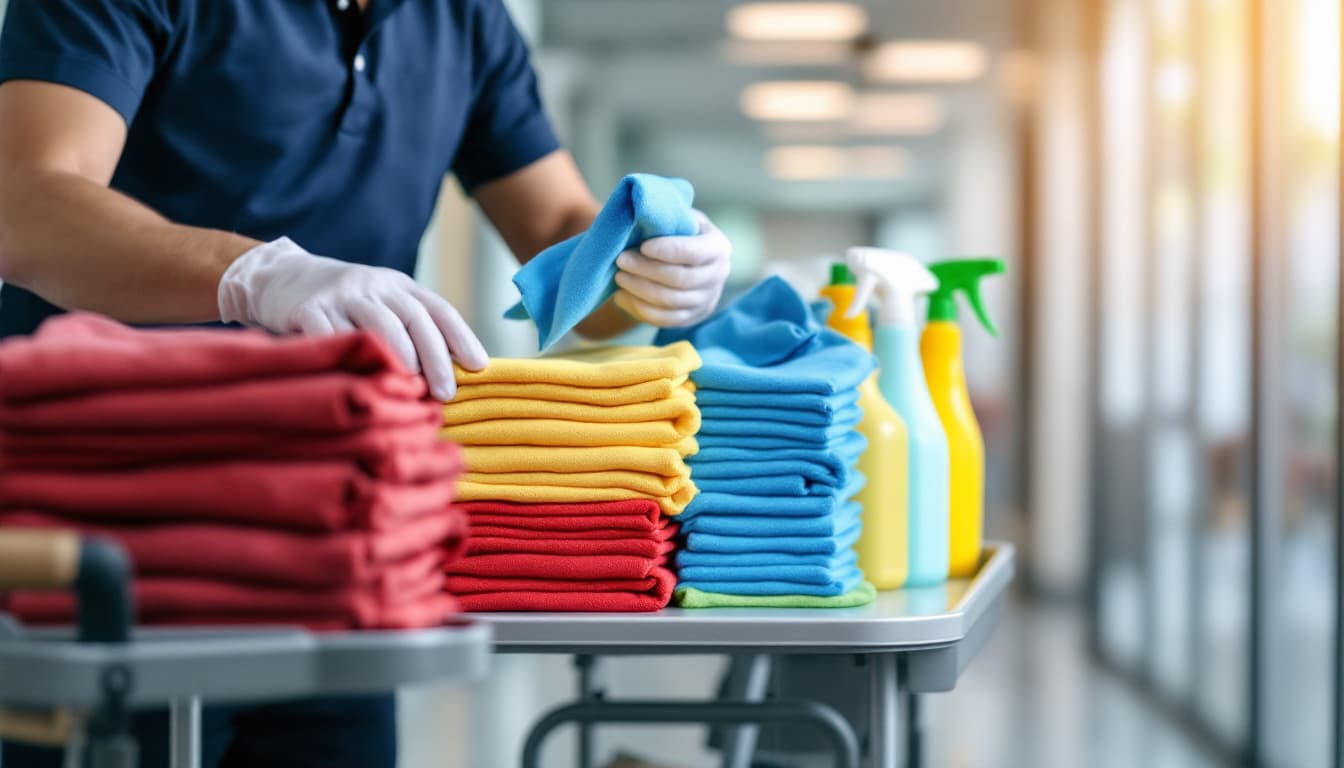
The problem with judging cleanliness by eye is that the things that make people sick are invisible. You can't see the bacteria on a break-room coffee-pot handle or the organic film left behind when a surface is wiped with an already-dirty cloth. This is the same distinction we drew in our restroom sanitation guide: "wiped down" is not "disinfected," and a surface that looks finished can be anything but. Worse, poor technique doesn't just fail to clean — it actively spreads contamination, which is the whole reason professional crews use a color-coded microfiber system to keep one zone's germs out of another.
If you can't see the problem, you can't manage it — and you certainly can't prove you fixed it. Measurement closes that gap. It replaces "I'm pretty sure that's clean" with a reading anyone can check.
ATP Testing: Putting a Number on Clean
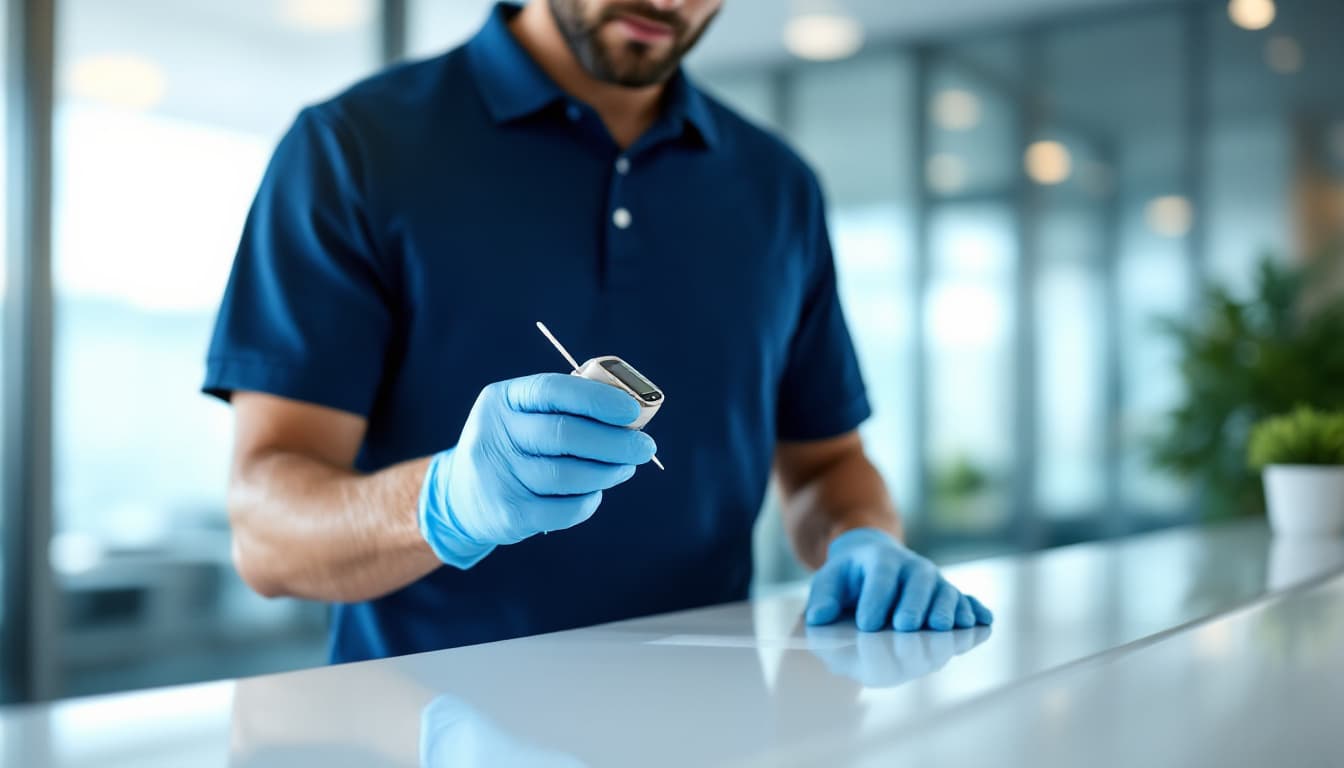
The workhorse of cleaning verification is ATP testing. ATP — adenosine triphosphate — is the energy molecule present in all living and once-living cells. Where there's ATP, there's organic matter: bacteria, mold, food residue, bodily fluids, the biological soil that both feeds microbes and marks where cleaning fell short. A technician swabs a surface, inserts the swab into a handheld device called a luminometer, and within seconds gets a reading in RLU — relative light units. The more organic residue on the surface, the higher the number.
The beauty of it is speed and objectivity. In under a minute, a surface everyone agreed "looked clean" gets a hard number. A high reading means residue is still there and the surface needs to be cleaned again — no debate, no judgment call. Industry frameworks put rough guardrails on what the numbers mean: the ISSA Clean Standard, built around a small defined swab area, treats readings at or below roughly 500 RLU as effective cleaning, the 500–1,000 range as needing improvement, and higher as a failure. Those exact thresholds depend on the device and the swab method, so the real power isn't the universal number — it's that a facility can set its own pass/fail limits and then hold every surface to them, every time.
What ATP Does and Doesn't Tell You
It's worth being precise about this, because it's where ATP testing is often oversold. An ATP reading measures organic residue — it does not directly count pathogens, and a low number is not a certificate of sterility. What a low RLU reading does tell you is that the surface has been physically cleaned well: the organic load bacteria depend on has been removed. Since effective surface hygiene is mostly about physically lifting and removing soil and microbes rather than just dousing them in chemical, that's exactly the outcome you want to verify. ATP answers the practical question that actually matters day to day: "Was this surface genuinely cleaned, or just wiped?"
Fluorescent Markers: Checking the Process, Not Just the Result
ATP tells you the outcome. A second tool checks the process. Before a space is cleaned, an inspector dabs high-touch points with a fluorescent gel or powder that's invisible in normal light but glows under a UV flashlight. It's harmless and essentially undetectable to the cleaning crew. After the next cleaning, the inspector returns with the UV light: any marks still glowing are spots that were missed entirely.
This is how you catch the surfaces that get skipped night after night — the underside of a faucet handle, the edge of a door push plate, the corner of a light switch. Healthcare guidance has long emphasized identifying the specific high-touch surfaces in a space and confirming each one is actually being reached. Pairing the two methods gives you the full picture: fluorescent markers prove the crew is touching every surface, and ATP proves the surfaces they touched came genuinely clean.
Where Measured Cleaning Matters Most
Verification isn't overkill everywhere, but there are places where the stakes justify it — and they're common across Northern Nevada:
- Medical and dental offices. In a medical office, exam-room surfaces and waiting-room touchpoints carry real infection risk, and "we cleaned it" is not the same as being able to show it was clean. Verification turns cleaning into documented evidence.
- Break rooms and shared kitchens. The germiest room in most offices is where people eat. ATP testing the sink faucet, microwave handle, and counters tells you whether the cleaning is keeping up.
- High-touch surfaces during cold and flu season. The door handles, elevator buttons, and shared keyboards that drive office outbreaks are exactly the points worth spot-checking when a building is trying to stay open and staffed through the winter.
- Schools, daycares, and other high-traffic buildings, where a single missed surface gets touched by hundreds of hands a day.
Why Measurement Changes the Cleaning Itself
The quiet benefit of measuring is what it does to behavior. When a cleaning program is verified, it stops being a black box. A facility manager can see which surfaces pass and which fail, where the weak spots are, and whether last month's problem got fixed. Trends replace hunches. A surface that keeps failing points to a real gap — the wrong product, not enough disinfectant contact time, a step being rushed — and you can fix the cause instead of just re-wiping the symptom.
It also brings accountability that "looks clean" never could. Verification data turns cleaning from something you take on faith into something you can audit, document, and improve — which is the same logic behind building a real cleaning-frequency program and the day-to-day upkeep between professional visits. You can't improve what you don't measure, and cleaning is no exception.
The Bottom Line
A spotless-looking surface is a claim, not a fact. ATP testing and fluorescent markers turn that claim into something you can verify — a number on a screen and a UV light that doesn't lie. For a general office, measured cleaning raises the floor on quality and accountability. For a medical office, a school, or any space where contamination carries real consequences, it's the difference between hoping a surface is clean and knowing it. Either way, the lesson is the same one every serious cleaning program eventually learns: don't guess that it's clean. Measure it.
Benchmark builds verification and quality-control into our office cleaning, medical office cleaning, and janitorial programs across Reno-Sparks, Carson City and Dayton, Minden and Gardnerville, and the Lake Tahoe area. Call (775) 530-0456 or request a free quote, and we'll show you what a cleaning program you can actually verify looks like.
Related Reading
Ready for a Cleaner Workspace?
Get a free, no-obligation cleaning plan customized for your Northern Nevada business.