Ask anyone in your building to name the dirtiest room at work and they'll point at the restroom. They'd be wrong. When researchers actually swab offices and count what's living on the surfaces, the break room wins almost every time — and it isn't close. Workplace-hygiene studies have repeatedly found that the break room sink faucet, the coffee pot and its handle, the microwave door handle, and the refrigerator door top the list of germiest surfaces in the average office, carrying more bacteria than the toilet seat down the hall.
That's an uncomfortable finding, because the break room is the one room people go to specifically to eat. It's where coffee gets poured, lunches get reheated, hands touch shared handles dozens of times an hour, and crumbs and spills feed whatever's already there. The restroom at least gets treated like a place that needs disinfecting. The break room gets treated like a kitchen at home — a quick wipe and a trust that someone else will handle the rest. This guide explains why the break room is the germ capital of the office, what a standard nightly clean tends to miss, and the layered cleaning plan that keeps it genuinely sanitary.
Why the Break Room Beats the Restroom
It comes down to three things working together: shared touchpoints, food, and the assumption that nobody is really responsible for cleaning it.
- Everyone touches the same few surfaces. The coffee pot handle, the microwave door, the fridge handle, the faucet, the vending buttons — a hundred people a day touch the same small set of objects, most of them right before they eat and often without washing their hands first. Restroom design assumes dirty hands; break room design doesn't.
- Food and moisture feed bacteria. A restroom surface is mostly dry and gets disinfected on a schedule. A break room counter collects coffee rings, spilled milk, crumbs, and condensation — organic matter that lets bacteria multiply instead of just sitting there. The sink, where people rinse mugs and dump old coffee, stays wet and is one of the most contaminated spots in the entire building.
- No one owns it. Employees assume the cleaning crew handles the break room; the crew often has it down for a light touch — empty the trash, wipe the visible counter, sweep the floor. The deep, disinfecting clean the room actually needs falls into the gap between "someone at the office will tidy it" and "the janitorial scope covers it." It usually doesn't get done by either.
The result is a room that looks presentable and tests filthy. And unlike a dark grout line, the risk here isn't cosmetic — it's the direct transfer of cold, flu, norovirus, and foodborne bacteria from shared surfaces to the food people are about to eat.
What a Standard Nightly Clean Misses
A good nightly janitorial crew does real work in the break room, but the default scope is built around appearance, not sanitation. The difference matters, and it's the same gap we describe in detail in our guide to why "wiped down" and "sanitized" are not the same thing. Wiping spreads a surface's soil around and makes it look clean; disinfecting requires the right product left on the surface for its full dwell time to actually kill pathogens. A fast wipe-down does the first and skips the second.
Beyond that, a few specific spots are almost always under-cleaned:
- Appliance handles and buttons. The microwave keypad, the fridge handle, the coffee maker, the water-cooler spigot — these are the highest-touch, highest-germ surfaces in the room and the easiest to skip because they aren't flat counters.
- The sink and drain. Break room sinks collect food waste and standing water and are rarely scrubbed and disinfected as a sink rather than wiped as a basin.
- The inside of the microwave and fridge. Spills bake on and get forgotten; the fridge grows its own ecosystem when no one is assigned to clear it out.
- Table undersides and chair arms. People touch these constantly; cleaning usually only reaches the tabletop.
- The floor near the sink and trash. Grease, dropped food, and spills soak into the grout, which is exactly how break room tile turns dark and starts to smell — the problem behind our guide to commercial tile and grout cleaning.
The Layered Break Room Cleaning Plan
A break room can't be kept sanitary by a single nightly pass, any more than a restroom can. It needs cleaning on three rhythms — through the day, every night, and on a periodic deep-clean cycle — each handling what the others can't.
Through the day: disinfect the touchpoints
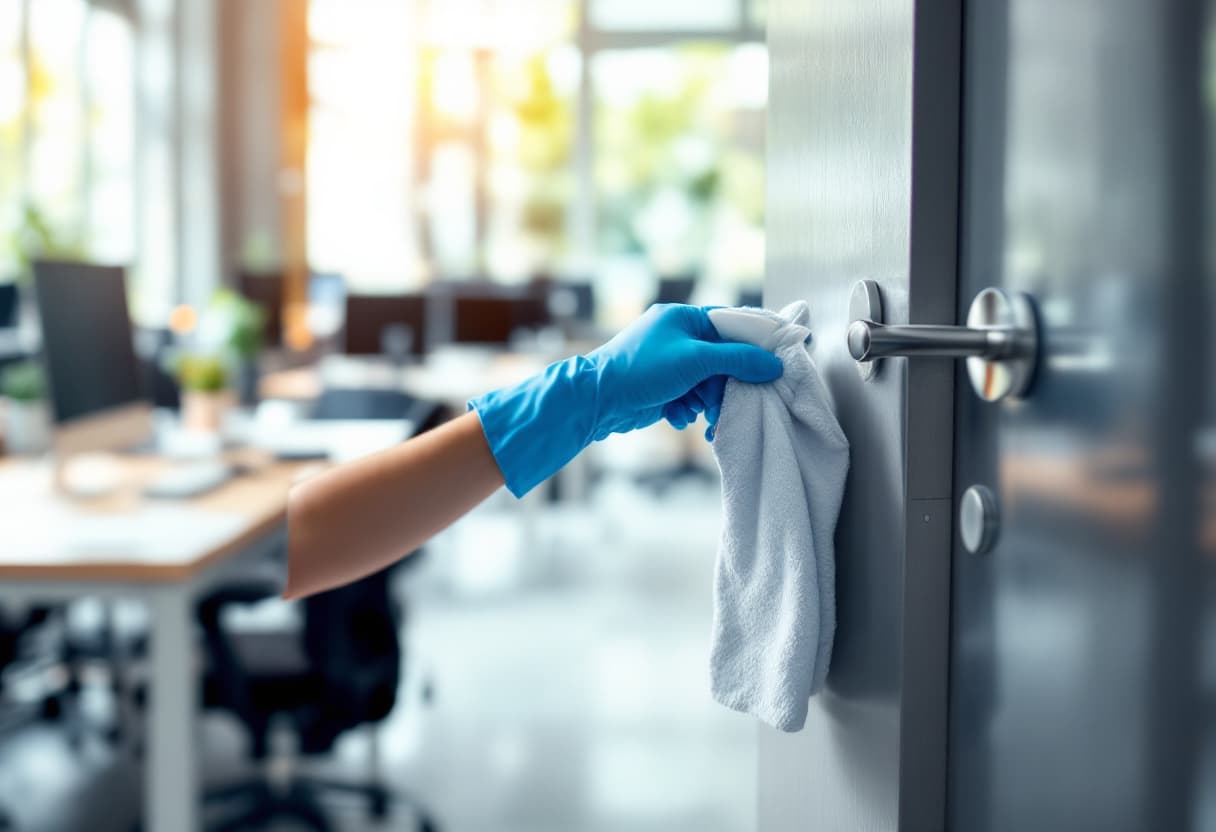
Germs build up on shared surfaces fastest during business hours, which is exactly when a once-a-night clean does nothing. High-touch surfaces — faucet, appliance handles, vending buttons, tabletops — should be disinfected at least midday, every day. This is the single highest-impact habit for a break room, and it's the same high-touch-surface discipline we lay out for the whole office in our cold and flu season disinfection plan. In a busy building, the practical way to make it happen is a day porter who resets the break room and hits the touchpoints during the day rather than leaving a twelve-hour gap.
Every night: clean and disinfect, not just tidy
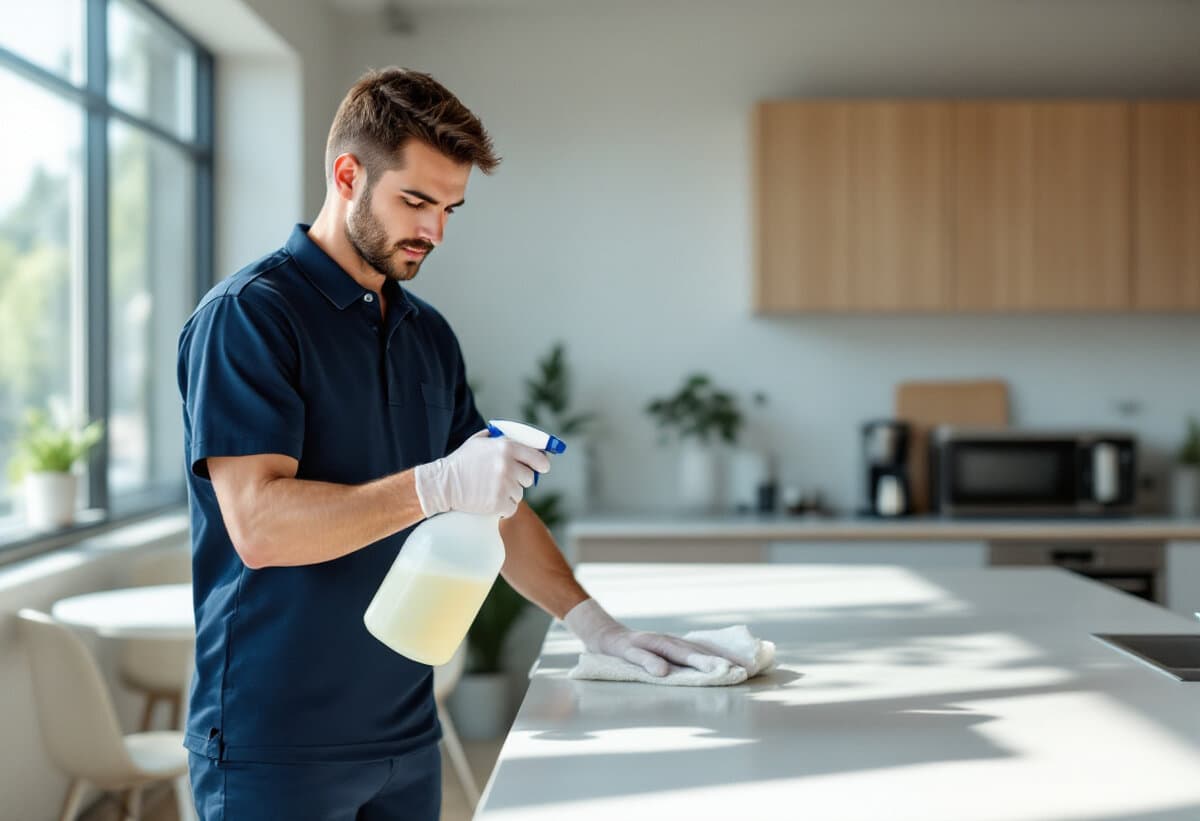
The nightly scope should go past appearance. That means disinfecting (with proper dwell time) all counters, tables, appliance exteriors and their handles, and the faucet; scrubbing and disinfecting the sink; emptying and sanitizing trash and recycling bins, not just swapping the liner; and damp-mopping the floor with attention to the grease-prone zone around the sink and trash. Setting this expectation in writing is part of knowing what your cleaning program should actually cover and how often.
On a cycle: the periodic deep clean
Some jobs only need doing weekly, monthly, or quarterly, but they can't be skipped forever:
- Inside the microwave and refrigerator — degrease and disinfect the interiors, and clear out forgotten food on a posted schedule.
- Descale the coffee equipment and water cooler, which build up mineral scale and biofilm — a real concern with Northern Nevada's hard water.
- Deep-clean the floor — periodic hot-water extraction of tile and grout (or of break room carpet) to pull out the ground-in grease and soil a nightly mop leaves behind.
- High-dusting and vents — cabinet tops, light fixtures, and air vents that collect dust and drop it back onto food-prep surfaces.
Northern Nevada Adds a Few Wrinkles
Our region makes the break room a little harder to keep clean. Hard water across the Reno–Sparks and Carson Valley area accelerates scale buildup in coffee makers, kettles, and water coolers, so descaling has to be a real line item, not an afterthought. The dry, dusty high-desert air means more fine dust settles on cabinet tops and vents and finds its way onto counters. And during cold and flu season, the break room is the room where a single sick employee most efficiently shares what they have with everyone else — making midday touchpoint disinfection less of a nicety and more of a sick-day-prevention measure.
What Your Team Can Do Between Cleanings
A professional plan does the heavy lifting, but a few shared habits keep the room from sliding backward between visits — the same between-cleanings mindset in our facility maintenance guide:
- Wipe up your own spills on the counter and in the microwave right away, before they dry on.
- Keep disinfecting wipes stocked and visible so quick touchpoint cleanups are easy.
- Post a "clean out the fridge" day each week so nothing is anyone's mystery to deal with.
- Rinse mugs and dump old coffee promptly instead of letting them sit in the sink.
- Encourage handwashing before eating — the simplest break room sanitation measure there is.
The Bottom Line
The break room earns its title as the germiest room in the building because it combines constant shared touch, food, and the assumption that someone else is cleaning it. A once-a-night tidy keeps it looking fine while the faucet, handles, and sink stay contaminated. Keeping it genuinely sanitary takes a layered plan: midday touchpoint disinfection, a nightly clean scoped to disinfect rather than tidy, and a periodic deep clean of appliances, equipment, and floors.
Benchmark builds break room sanitation into our office cleaning and janitorial programs across Reno-Sparks, Carson City and Dayton, Minden and Gardnerville, and the Lake Tahoe area. Call (775) 530-0456 or request a free quote, and we'll review your break room and build a cleaning plan that keeps the room your team eats in as clean as it looks.
Related Reading
- Commercial Restroom Sanitation: Why 'Wiped Down' and 'Sanitized' Are Not the Same Thing
- Cold and Flu Season Disinfection: The High-Touch Surface Plan That Keeps Northern Nevada Offices Open
- Day Porter Services: Why High-Traffic Northern Nevada Buildings Need Daytime Cleaning, Not Just a Nightly Crew
Ready for a Cleaner Workspace?
Get a free, no-obligation cleaning plan customized for your Northern Nevada business.