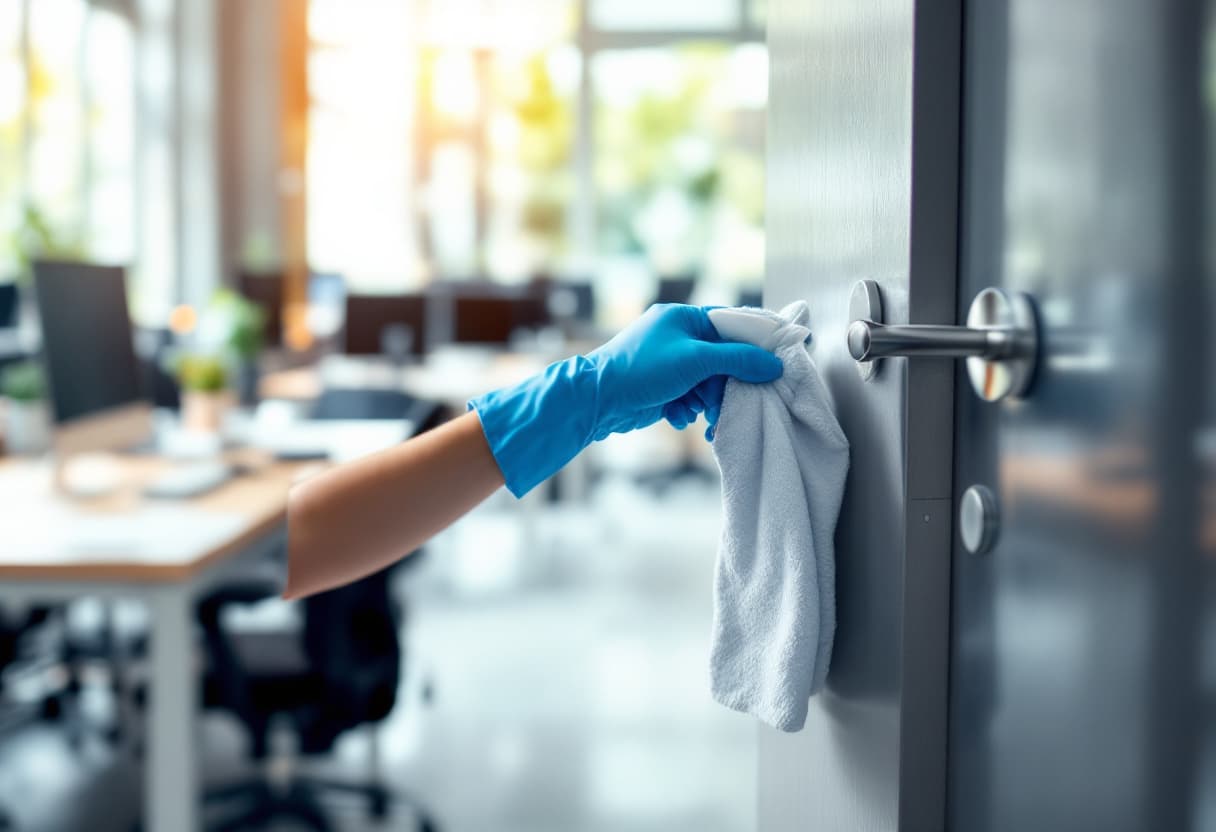
Picture the cloth that wiped down the toilet rims in your building this morning. Now picture where it went next. In a building without a system, there's a good chance that same cloth — rinsed in a bucket, maybe, but not much more — later wiped a doorknob, a reception desk, or the edge of the break-room sink. That isn't cleaning. That's taking the germs from the dirtiest surface in the building and personally delivering them to the places people touch most. It's one of the most common, least visible mistakes in commercial cleaning, and the fix is refreshingly simple: color.
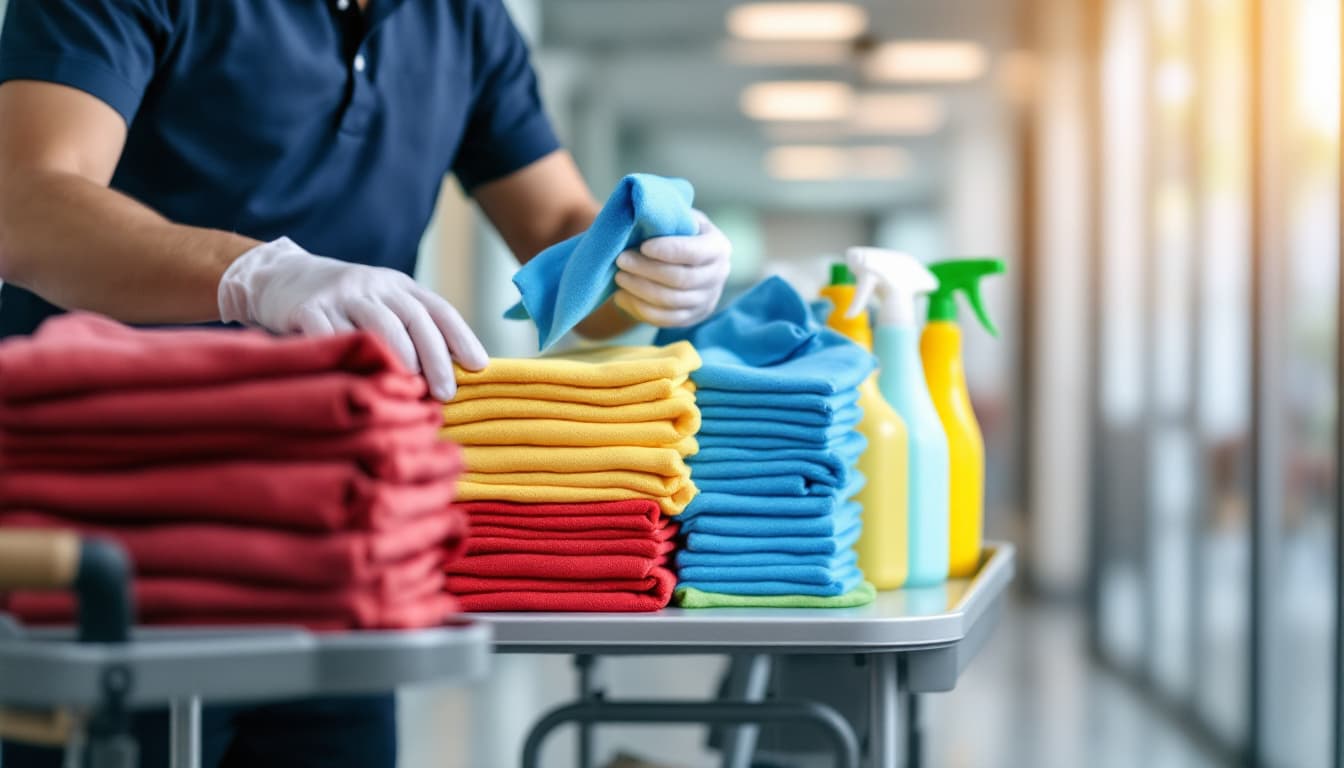
Color-coded microfiber is the professional answer to cross-contamination — the spread of germs from one area to another on the very tools meant to clean. The idea is almost embarrassingly straightforward: assign each type of area its own color of cloth and mop, and never let the colors mix. A red cloth that cleans restrooms never touches a desk. A green cloth that cleans the kitchen never sees a toilet. This guide explains how the system works, why the cloth itself matters as much as what you spray on it, and what color coding looks like in a real Northern Nevada office, medical office, or school.
The Hidden Problem: Your Cleaning Tools Are Moving Germs Around
We tend to judge cleaning by the chemical. Is it EPA-registered? Does it kill 99.9% of germs? But the best disinfectant in the world is worthless if the tool applying it is already contaminated. A rag that just absorbed bacteria from a urinal doesn't disinfect the next surface — it inoculates it. And because the transfer is invisible, nobody notices. The counter looks clean. It smells clean. It's covered in whatever the last surface was carrying.
This is the exact failure that makes the break room the germiest room in the building, and it's the reason "wiped down" and "disinfected" are not the same thing — the same distinction we drew in our restroom sanitation guide. One contaminated cloth, reused across zones, quietly undoes an entire cleaning program. Color coding exists to make that mistake impossible, not by asking people to remember which rag is "the bathroom one," but by making the rule something you can see across the room.
What the Colors Mean
There's no single law that dictates the colors — in the U.S. it's an industry best practice rather than a regulation, and healthcare systems often formalize their own schemes (the UK's National Health Service runs a well-known four-color standard). But most professional cleaning operations converge on the same logic, separating areas by contamination risk:
- Red — restrooms and high-risk areas. Toilets, urinals, and the surfaces around them, plus any biohazard cleanup. Red is the "stop" color for a reason: these cloths carry the highest contamination and never leave the restroom.
- Yellow — restroom "clean" touchpoints and sinks. Sinks, mirrors, partitions, dispensers, and faucet handles. Splitting the restroom into red (toilet) and yellow (everything else) keeps toilet bacteria off the surfaces people touch with clean hands.
- Blue — general low-risk surfaces. Offices, desks, conference tables, glass, and windows. This is the color doing most of the work across a typical workplace.
- Green — kitchens, break rooms, and food-prep areas. The one zone that must stay separate from everything restroom-related, because this is where food gets handled and eaten.
The specific palette matters less than the discipline behind it. What makes the system work is that it's consistent, trained, and enforced — every technician on every shift uses the same colors for the same zones, so there's never a judgment call about whether a cloth is "probably fine."
Why Microfiber, Not Cotton Rags
Color coding is only half the story. The other half is the cloth itself. Traditional cotton rags and string mops mostly push soil and water around — they smear a thin film of dirty solution across a surface and leave much of it behind. Microfiber is built differently. Its split fibers are thousands of times finer than a human hair, creating a dense web of edges that physically lift and trap dirt, grease, and microbes rather than smearing them, and hold that debris until the cloth is laundered.
That mechanical capture is why microfiber removes a far higher share of surface bacteria than a cotton rag even before any disinfectant is involved — and why it uses less chemical and less water to do it. Pair that lifting power with a color system that keeps each cloth in its own zone, and you get the two things real surface hygiene actually requires: germs are removed from the surface, and they aren't carried anywhere else.
Laundering: Where Color Systems Quietly Fail
Here's the catch that separates a program that works from one that only looks organized: the colors mean nothing if the cloths all go into the same wash and come out cross-contaminated anyway. A microfiber cloth is a reusable tool, and a tool that's washed wrong just redistributes the germs it collected. A credible color system has to extend all the way through laundering:
- Colors are washed separately — or at minimum, restroom reds are never laundered with kitchen greens.
- Microfiber is washed without fabric softener, which clogs the split fibers and destroys the cloth's grip. This is the single most common way facilities ruin their own microfiber.
- Cloths are fully dried and stored clean, because a damp cloth left in a bin grows exactly what you're trying to remove.
- Worn cloths are retired. A flattened, graying microfiber has lost its lift and is coasting on reputation.
A fresh cloth for each area on each visit — rather than one rag wrung out over and over — is a core part of what professional service buys you, and it's the kind of behind-the-scenes rigor that doesn't show up in a walkthrough but absolutely shows up in how often your team gets sick.
Why This Matters More in Shared and High-Stakes Spaces
Cross-contamination control isn't equally urgent everywhere, and the stakes climb fast in certain Northern Nevada settings. In medical and dental offices, moving pathogens from a restroom or an exam room to a waiting area is an infection-control failure, not just an aesthetic one — which is why medical facility cleaning standards lean so heavily on strict separation of tools. In schools and daycares, where germs spread through shared surfaces faster than almost anywhere, a single reused cloth can touch a hundred kids' worth of contact points.
And in any ordinary office heading into respiratory-virus season, color coding is a direct extension of the high-touch disinfection plan that keeps offices open through cold and flu months. Disinfecting a doorknob with a cloth that just cleaned a restroom isn't protection — it's the problem wearing a cleaning uniform.
What to Ask Your Cleaning Provider
You don't need to run the system yourself; you need to know your provider does. A few questions separate a professional program from a bucket-and-rag operation:
- Do you use color-coded microfiber, and what's the scheme? A confident, specific answer is a good sign; a blank look is a red flag.
- How are cloths laundered and how often are they replaced? "We launder by color and use fresh cloths each visit" is what you want to hear.
- How does the system carry over to our restrooms, break room, and any medical or food areas? The answer should map cleanly onto your actual spaces.
Color coding is a small detail that reveals a large truth about how a company cleans — the same mindset behind a well-built cleaning frequency plan and the quieter habits in our facility maintenance tips between cleanings. At Benchmark, color-coded microfiber is standard on every office cleaning and janitorial route we run across Reno, Sparks, Carson City, and the Tahoe area — because the cheapest way to keep a building healthy is to stop moving its germs around in the first place. If you'd like to see how a disciplined cleaning program would fit your facility, request a free quote.
Ready for a Cleaner Workspace?
Get a free, no-obligation cleaning plan customized for your Northern Nevada business.