It almost always starts with one person. Someone comes to work on a Monday feeling "a little off," touches a few door handles, shares the break-room microwave, and goes home early. By Thursday, four more people are out with the same violent stomach bug, the phones are going unanswered, and a manager is staring at a reception desk that has been wiped down every single day and wondering how this happened. The answer, nine times out of ten in the dead of winter, is norovirus — and the reason the cleaning didn't stop it is that ordinary wiping was never going to.
Norovirus is the bug most people call the "stomach flu," and it owns the cold months. It's the most common cause of acute gastroenteritis — the sudden, miserable vomiting and diarrhea that can flatten a workplace in days — and it spreads so efficiently that a single infected person can seed an entire floor. For any Northern Nevada business that packs people into shared indoor space from November through spring, understanding how norovirus actually moves, and what truly kills it, is the difference between a quiet winter and a week of empty desks.
Meet Norovirus: Small, Tough, and Built for Winter
First, a myth worth clearing up: norovirus has nothing to do with influenza. The "stomach flu" nickname is a misnomer — your flu shot does nothing against it. It's a completely separate virus, and it behaves differently from the respiratory bugs that drive cold and flu season.
What makes it so dangerous in a shared building comes down to three things. It is astonishingly contagious — it takes only a tiny number of viral particles to make someone sick, while an infected person sheds them by the billions in vomit and stool. It is hardy — norovirus can survive on surfaces for days, outlasting a lot of the germs people worry about more. And it spreads by every route at once: contaminated hands, contaminated surfaces, contaminated food, and even the invisible droplets that spray into the air when someone gets sick, settling onto nearby counters and seats. Pack all of that into a heated, closed-up winter office where everyone touches the same doors, and you have the perfect conditions for an outbreak.
Why Your Hand Sanitizer Won't Save You
Here's the detail that catches most businesses off guard. The wall-mounted hand sanitizer that carried everyone through flu season is not reliable against norovirus. Norovirus is a "non-enveloped" virus, meaning it lacks the fatty outer coat that alcohol-based sanitizers are so good at destroying. Squirt sanitizer on norovirus and it largely shrugs it off.
The defense that actually works is older and simpler: soap and water, scrubbed in for a full twenty seconds. Handwashing doesn't have to chemically kill the virus — it physically lifts it off the skin and rinses it down the drain. That's why a norovirus-aware building leans hard on real handwashing, stocked and functioning restrooms, and signage that reminds people sanitizer is a backup, not a substitute. It's also why restroom hygiene stops being a courtesy and becomes a frontline defense — the kind of rigor we lay out in our commercial restroom sanitation guide.
"Looks Clean" Is Exactly the Trap
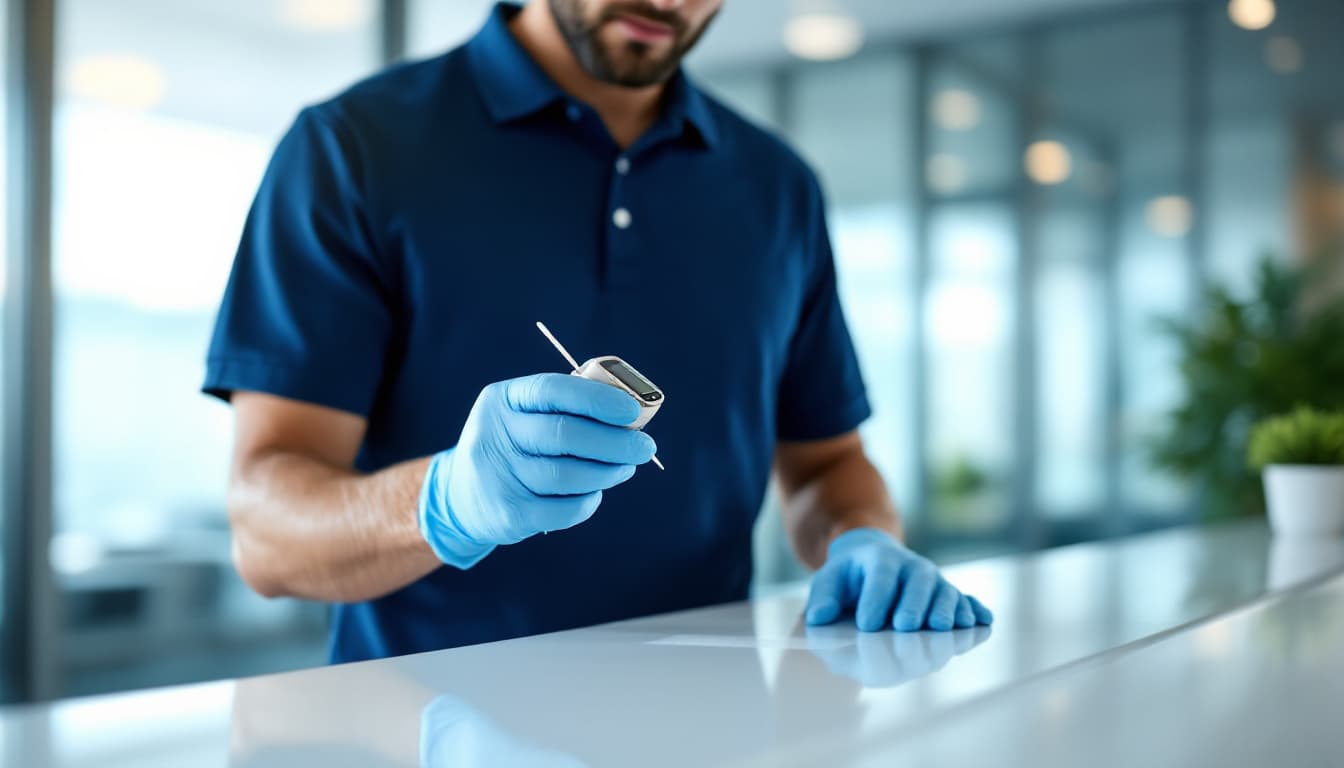
The hardest thing about norovirus is that it's invisible, and a surface that carries a heavy viral load looks identical to one that's spotless. A door handle, a shared keyboard, an elevator button, a faucet lever — any of these can be freshly contaminated and gleaming at the same time. The virus lingers there for days, waiting for the next hand.
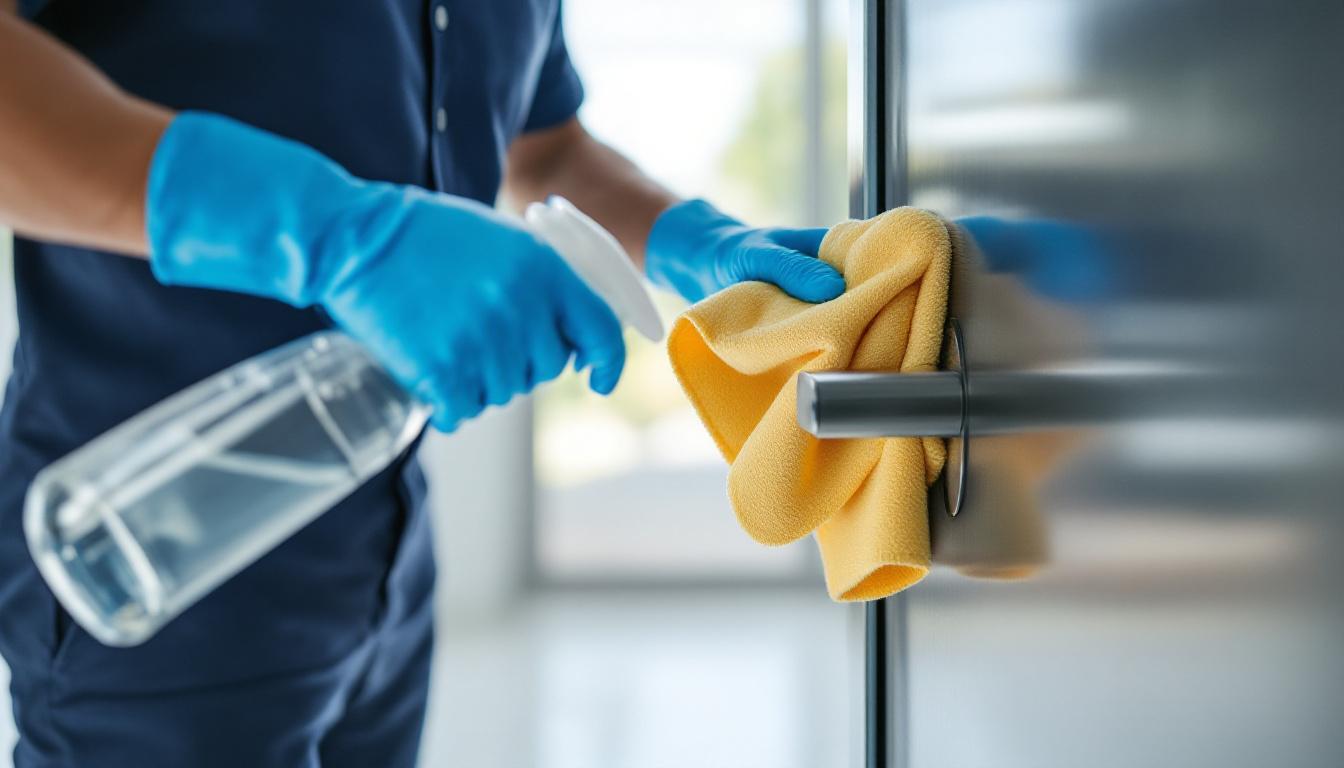
This is the whole reason professional cleaning has moved away from "wipe it until it looks clean" toward cleaning that's measured, not guessed. Appearance tells you nothing about contamination, so the focus shifts to the high-touch points — the specific surfaces hundreds of hands share every day — and to disinfecting them on a schedule rather than when they look dirty. In an outbreak, that list of high-touch surfaces is the battleground.
Cleaning Is Not Disinfecting — and Order Matters
These two words get used interchangeably, and conflating them is how norovirus survives a "cleaning." They are two separate jobs that have to happen in sequence:
- Cleaning removes visible soil and organic matter with detergent and a cloth. It reduces germs by carrying them away, but it does not reliably kill them.
- Disinfecting uses a chemical registered to destroy specific pathogens, applied after cleaning, because leftover grime shields the virus from the disinfectant.
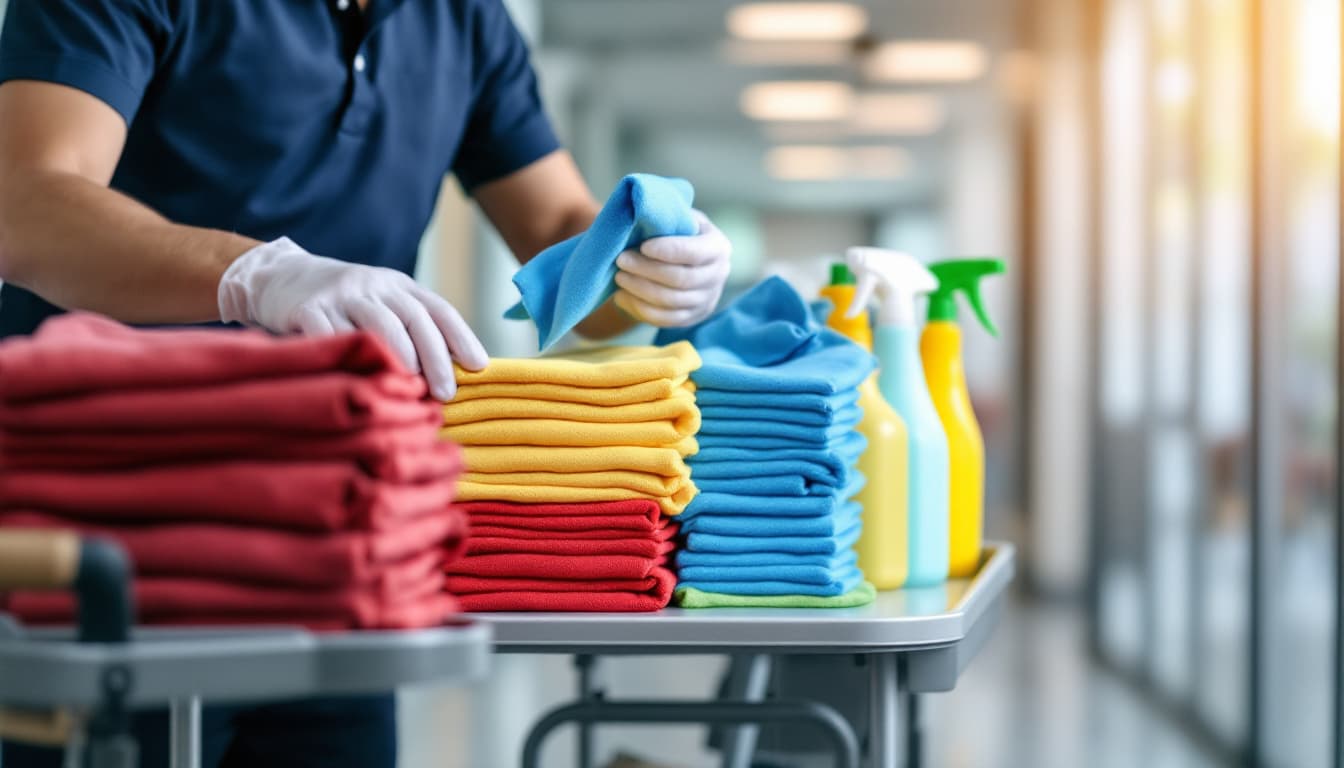
Against norovirus, the disinfectant itself has to be the right one. The EPA keeps a specific list of products proven effective against norovirus — known as List G — and a diluted bleach solution is a classic, effective choice where surfaces can tolerate it. But buying the right product is only half of it. Every disinfectant has a contact time (sometimes called dwell time): the number of minutes the surface must stay visibly wet for the chemical to work. Spray-and-immediately-wipe is one of the most common cleaning mistakes there is, and against norovirus it's close to useless — the surface dries in seconds and the virus is never actually exposed long enough to die. Doing this correctly, and without dragging the virus from a sick person's office onto a clean desk, is exactly why color-coded microfiber and anti-cross-contamination systems matter so much during an outbreak.
The Vomiting Event: The Moment That Makes or Breaks a Building
If someone gets sick in a hallway, restroom, or classroom, the next fifteen minutes decide how big the outbreak gets. A vomiting incident doesn't just contaminate the floor — it aerosolizes virus particles that drift and settle across a surprisingly wide radius, onto chairs, walls, and surfaces several feet away. Mopping the obvious spot and moving on leaves most of the contamination in place.
A proper response looks nothing like a casual wipe-up: the area is cordoned off, the responder wears gloves and protection, the mess is carefully contained and bagged rather than spread, and then a generous radius around it is cleaned and disinfected with a norovirus-rated product at full contact time. Soft surfaces caught in the splash zone need their own treatment. Having a trained person who can respond to that during business hours — rather than leaving it until the night crew, by which point dozens of people have walked through — is one of the quiet, underrated values of on-site day porter service.
Where Outbreaks Spread Fastest
Some rooms do more than their share of the damage. The break room and shared kitchen are ground zero — communal microwaves, refrigerator handles, coffee pots, and the food itself make it a perfect relay point. Medical offices face the added challenge of sick visitors arriving all day. And schools and daycares are legendary norovirus amplifiers, where young children and close contact send a single case rippling through classrooms and straight home to parents' workplaces.
One surface people forget is the floor. Norovirus survives on soft materials, so carpet and upholstery in the splash radius of a sick event can quietly hold the virus after the hard surfaces are handled — which is why outbreak cleanup sometimes calls for real hot-water carpet extraction rather than a spot-dab with a cloth.
Building a Norovirus-Ready Cleaning Program
None of this is about panic; it's about having a plan in place before the first case walks in the door. A building that handles norovirus season well has a handful of things lined up: a cleaning frequency matched to how hard the space is actually used, a defined high-touch-point rotation that gets disinfected daily, the right EPA List G products used at full contact time, crews trained to clean-then-disinfect without cross-contaminating, and a rapid-response protocol for sick events. The ordinary daily upkeep covered in our between-cleanings maintenance guide keeps the baseline low so the system has less to fight when a bug arrives.
The Bottom Line
Norovirus wins when a building treats "looks clean" as "is clean." It's too contagious, too tough, and too invisible to be stopped by a daily once-over with a dry cloth. What stops it is boring, disciplined, and effective: real handwashing, the right disinfectant used the right way, relentless attention to high-touch surfaces, and a crew that knows exactly what to do the moment someone gets sick. That's a program, not a product — and winter is the season it pays for itself.
Benchmark builds that kind of program for businesses across Northern Nevada, with office cleaning, medical-office cleaning, and janitorial crews trained in disinfection and outbreak response. We serve Reno-Sparks, Carson City and Dayton, Minden and Gardnerville, and the Lake Tahoe area. Call (775) 530-0456 or request a free quote, and we'll build a winter cleaning plan that keeps your team healthy and your doors open through the season.
Related Reading
Ready for a Cleaner Workspace?
Get a free, no-obligation cleaning plan customized for your Northern Nevada business.